Does property have properties?

“Thus begins an inquiry on the meaning of value in economic philosophy. This series of articles will attempt to reconceptualize the social and natural order of economics through an analysis of the commons—the natural, genetic, physical, social, cultural and intellectual resources which people manage by negotiating their own norms and rules. (For brevity’s sake, Part One uses the term ‘commons’ loosely to refer to both self-organized commons and unorganized common pool resources—a distinction which will be spelled out in subsequent articles.) The recurring theme in these writings is the creation of a commons-based economy which expresses a more inclusive type of value than in traditional economics. A common theory of value—rooted in philosophy, psychology, sociology, anthropology, linguistics, communication, organizational behavior, technology, history, culture, environmentalism, economics, law, and social and political theory—will explore many of the leading ontological presuppositions in our present belief systems.”

+ James Quilligan
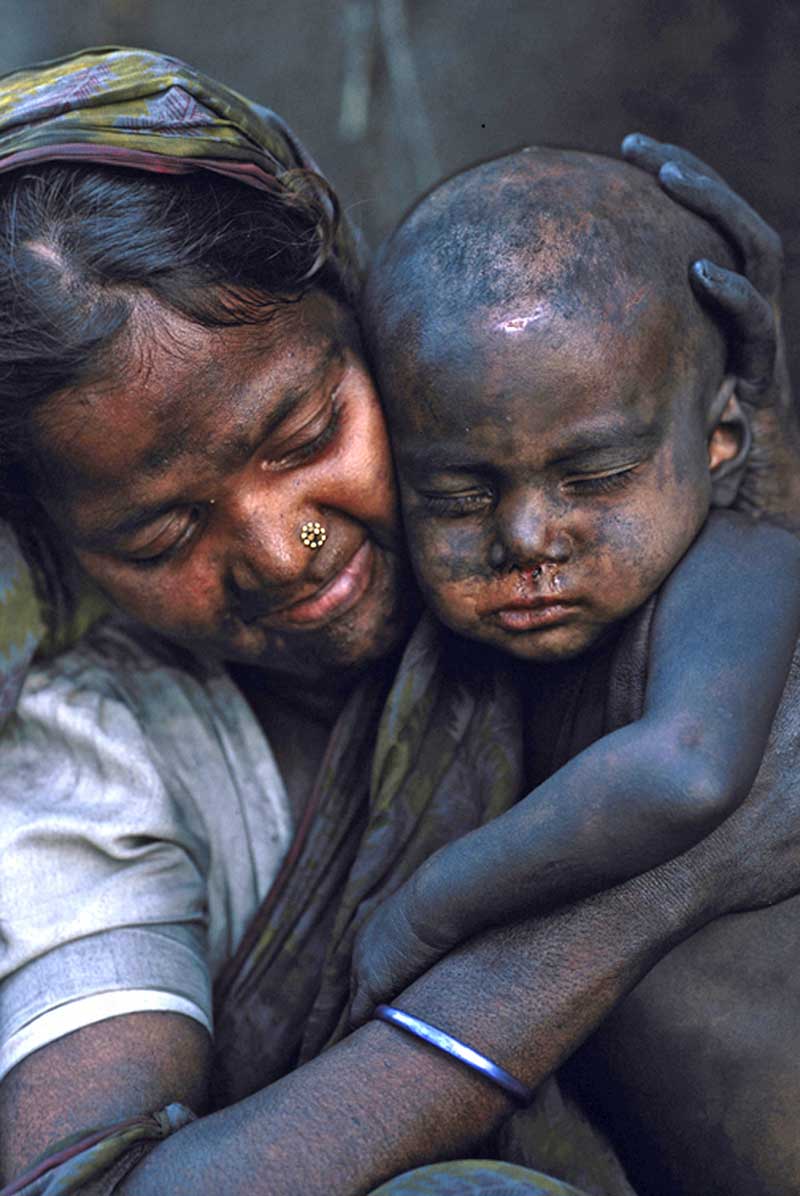
Children of the black dust

There are hundreds of informal factories and workshops inside and on the outskirts of Dhaka, the capital of Bangladesh. The industry employs thousands of women and children. All day long women and children break used batteries to get reusable parts and tiny pieces of metal out of them. Once separated, these materials are sent to battery manufacturing factories and workshops that either reuse them or melt them to make other useful materials.

While breaking used batteries, or even playing, children inhale millions of fine carbon dust particles from the batteries throughout the day. Depending on how much work they do, each of them get between Taka 5-15 per day (US $1.00=Taka 60). It takes a young child 4-12 days to earn just one US dollar.
A woman holds her child, blackened by carbon dust. His nose bleeds due to infections caused by exposure to dust and pollution during play in the workshop in Korar Ghat located on the outskirts of Dhaka. Many women bring their children along so they can look after them while working

Open source ecology

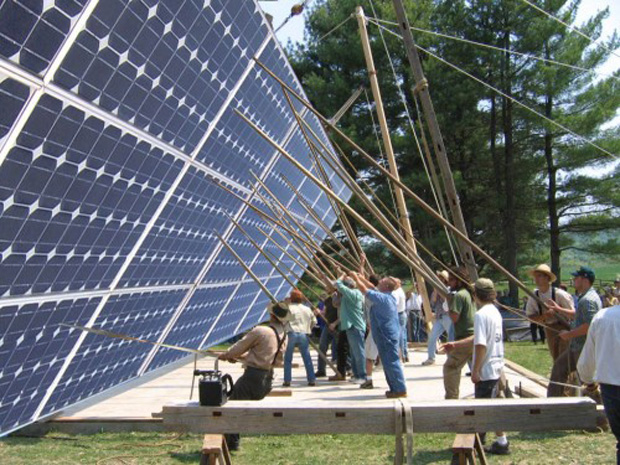
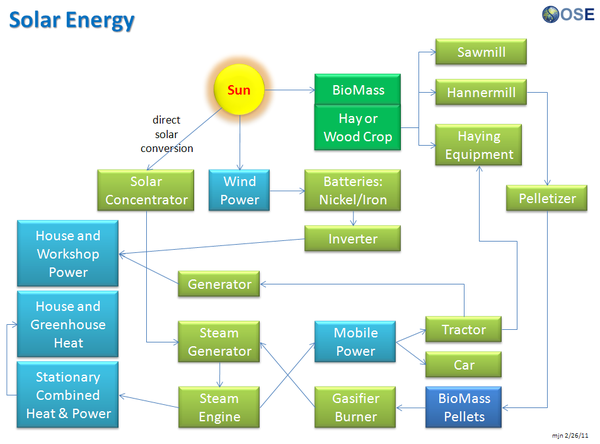
Marcin Jaubowski en su charla en TED explica cómo surgió Open Source Ecology, una comunidad de granjeros, ingenieros y colaboradores varios con más de 50 diseños abiertos para el que quiera construir su propio tractor, bulldozer, máquina para hacer pellets, taladradora hidráulica…

Una imagen vale más que mil palabras. En el gráfico podéis ver el tipo de máquinas sobre los que han trabajado.

El planeta Tierra

Un vídeo montado por la Estacion Espacial International mediante time-lapse. Imágenes de la belleza del baile de las auroras boreales en ambos hemisferios, el amanecer, el ocaso, tormentas eléctricas…y luz artificial… la contaminación lumínica de más de 7.000 millones de personas inmersas en el derroche de los menguantes recursos fósiles.

Open Source Electronics

What would you do with the Wiring?

Wiring is an open source electronics prototyping platform composed of a programming environment (IDE), an electronics prototyping board, documentation thoughtfully created with designers and artists in mind and a community where experts, intermediate and beginners from around the world share ideas, knowledge and their collective experience. There are thousands of students, artists, designers, researchers, and hobbyists who use Wiring for learning, prototyping, and finishedPrevious professional work production.

Peak oil – Do the math

Un análisis fracamente detallado del peak oil y sus consecuencias. Es algo largo, pero merece la pena leerlo.
Su conclusión (‘Do the math’, Tom Murphy)
«Tendemos a pensar que tenemos una abilidad especial que nos permite resolver cualquier problema. Pero no tenemos ninguna analogía histórica al pico del petróleo, para el que aún no tenemos un remplazo claro en el horizonte. Como resultado de nuestro atracón de petróleo, tenemos problemas sin precedentes de: población, agua, agricultura, pesca, polución, cambio climático y mucho más. Nos enfentamos a un momento histórico bastante especial. Es peligroso asumir que seremos capaces de lidiar con un problema de esta magnitud, porque ese tipo de asunciones nos llevarán a rechazar el problema y a no hacer nada. INACEPTABLE.
….
Lo que de verdad me molesta es que creo que somos capaces de solucionar este problema, pero sólo si modificamos de forma sustancial nuestros hábitos. No seres capaces de aceptar los cambios radicales que necesitamos si no nos ponemos de acuerdo en el desastre que ocurrirá sino lo hacemos. Incluso si me equivocase respecto a las consecuencias del pico del petróleo, el cambio del que hablo resultará en una vida más plena y mejor. «

«We tend to have self-confidence in our ability to solve any problem. But we have no historical analog to the peak of fossil fuels, without a clear (and superior) replacement on the horizon. As a result of our fossil fuel binge, we have unprecedented problems in population, water, agriculture, fisheries, pollution, climate change, and so on. Our moment in history is rather special. It is dangerous to assume that we’ll gracefully handle problems at this scale, because such assumptions amount to dismissals and concomitant inaction. Unacceptable
….
The frustrating thing for me is that I believe it is possible to beat this problem, but only if we aggressively alter our practices. We would never adopt the necessary radical changes without first agreeing on the potential for disaster otherwise. Yet even if I’m wrong about the problem, the shift I imagine may result in a better, more fulfilling life anyway.»