Carta de Aalborg

La Carta de Aalborg fue aprobada por los participantes en la Conferencia europea sobre ciudades sostenibles, celebrada en Aalborg (Dinamarca) entre los días 24 y 27 de mayo de 1994 bajo el patrocinio conjunto de la Comisión Europea y la ciudad de Aalborg y organizada por el Consejo internacional de iniciativas ambientales locales (ICLEI). Este organismo asumió la responsabilidad de elaborar el proyecto de la Carta junto con el Ministerio de planificación y transporte urbanos del estado federado alemán de Renania del Norte-Westfalia. La Carta refleja las ideas y los términos de un gran número de colaboradores.

La Carta de Aalborg fue firmada inicialmente por 80 autoridades locales europeas y 253 representantes de organizaciones internacionales, gobiernos nacionales, centros científicos, asesores y particulares. Con la firma de la Carta, las ciudades, poblaciones menores y unidades territoriales de Europa se comprometieron a participar en las iniciativas locales del Programa 21 y a desarrollar programas a largo plazo hacia un desarrollo sostenible, a la vez que iniciaron la campaña de ciudades europeas sostenibles.
A fecha junio de 2002, según el Censo de Población y Viviendas a 1 de noviembre de 2001, el 43% de la población española vive en un municipio que ha firmado la Carta de Aalborg, lo que supone un porcentaje considerable y es un parámetro de la preocupación que tienen las administraciones locales por la sostenibilidad.
Si en lugar de atender al parámetro de la población, atendemos al número de municipios firmantes (que consideramos un parámetro de repercusión territorial), podemos comprobar que éste apenas supera el 5%.
Por tanto se puede decir que la preocupación de los municipios españoles en los problemas de la sostenibilidad se encuentra concentrado en los municipios de mayor tamaño, existiendo una polarización importante en conciencia de sostenibilidad, con unas ciudades grandes y medias (que recogen a gran parte de la población, el 95% del total) que comienzan a sensibilizarse y el resto de los municipios que aún no se han incorporado al proceso.
CARTA DE AALBORG
NUESTRA VISIÓN COMUN
Nosotros los Gobiernos Locales Europeos unidos en la Campaña Europea de Ciudades y Pueblos Sostenibles, reunidos en la Conferencia Aalborg +10, ratificamos una vision común de un futuro sostenible de nuestras comunidades.
Nuestra visión es la de ciudades y pueblos integradores, prósperos, creativos y sostenibles, y que proporcionen una buena calidad de vida a todos los ciudadanos y posibiliten su participación en todos los aspectos de la vida urbana.Desde la cumbre de Río en 1992 y la adopción en 1994 de los principios de sostenibilidad incorporados a la Carta de Ciudades y de Pueblos Europeos hacia la Sostenibilidad, «la Carta de Aalborg», nuestra visión ha crecido a través del «Plan de Acción de Lisboa – De la carta a la Acción», en 1996, del «Llamamiento de Hannover a los líderes y gobernantes municipales europeos de cara al siglo XXI” en el 2000, y por último del “Llamamiento de Johannesburgo».
Consideramos que la “Conferencia Aalborg+10 – Inspiración para el Futuro” supone un hito en este proceso continuo.
NUESTROS RETOS
En el desempeño de nuestras responsabilidades en el gobierno y gestión municipal, estamos cada vez más sujetos a las presiones combinadas de la globalización económica y del desarrollo tecnológico. Nos enfrentamos a cambios económicos fundamentales así como a amenazas naturales y humanas sobre nuestras comunidades y recursos.
Nos encontramos ante retos de enormes proporciones: crear empleo en una economía basada en el conocimiento, combatir la pobreza y la exclusión social, asegurar la protección eficaz de nuestro medio ambiente, reducir nuestra la huella ecológica, responder a los cambios demográficos y garantizar la diversidad cultural, así como evitar los conflictos y asegurar la paz en comunidades antes sacudidas por las guerras.
NUESTRAS RESPONSABILIDADES
Nos corresponde un papel central en asegurar un desarrollo sostenible a la vez que respondemos a nuestros retos en cooperación con el resto de ámbitos gubernamentales. Este papel central exige que tengamos un enfoque más enérgico e integrado en el diseño de políticas locales que armonicen los objetivos ambientales, sociales, culturales y económicos. Al mismo tiempo, debemos asegurar que nuestros esfuerzos para mejorar nuestra calidad de vida local no pongan en peligro la de otras personas de otras partes del mundo ni las de generaciones futuras.
Nosotros somos el nivel del gobierno más cercano a los ciudadanos europeos en el día a día, y por lo tanto tenemos una oportunidad única de influir en los comportamientos individuales hacia la sostenibilidad a través de la educación y la concienciación. Podemos proporcionar los medios a nivel local para implementar políticas y estrategias europeas tales como La estrategia de Lisboa, La estrategia europea de desarrollo sostenible, El sexto programa de acción para el medio ambiente, la próxima Estrategia temática de medio ambiente urbano de la UE, así como iniciativas europeas contra el cambio climático, en materia de salud, en formas de gobierno y en la puesta en marcha de las Metas de Desarrollo del Milenio de la ONU y el Plan de Implementación de Johannesburgo.
NUESTRA RESPUESTA: LOS COMPROMISOS DE AALBORG
Nosotros los Gobiernos Locales Europeos, aceptamos estos retos y asumimos nuestras responsabilidades. Adoptamos los Compromisos de Aalborg como un paso adelante significativo, desde el programa de actuación a la acción estratégica y coordinada.
Aceleraremos nuestros esfuerzos hacia un desarrollo local sostenible, tomando la inspiración de los principios de sostenibilidad establecidos en la «Carta de Aalborg». Tenemos el ánimo de trasladar nuestra visión común de un futuro urbano sostenible a objetivos y actuaciones tangibles de sostenibilidad a nivel local. Adoptamos los Compromisos de Aalborg como un medio a partir del cual seleccionaremos las prioridades de acuerdo a nuestras situaciones y necesidades locales. Iniciaremos un proceso participativo local, que identifique objetivos y establezca plazos para realizar un seguimiento de los progresos hacia su consecución.
NUESTROS SOCIOS
Hacemos un llamamiento a todos los gobiernos locales y regionales europeos para que se unan a nosotros en la firma de los Compromisos de Aalborg, y para que hagan partícipe a la Campaña Europea de Ciudades y Pueblos Sostenibles de su decisión.
Pedimos a nuestras asociaciones nacionales de autoridades regionales y locales, a nuestros gobiernos nacionales, a la Comisión Europea y a otras instituciones europeas que reconozcan los Compromisos de Aalborg como contribución clave a los esfuerzos de Europa hacia la sostenibilidad, y que apoyen nuestro trabajo en los Compromisos de Aalborg.
Hacemos un llamamiento a las redes de gobiernos locales, incluyendo la Asociación de Ciudades y de Regiones para el Reciclaje (ACRR), la Alianza del Clima – Klima-Bündnis – la Alianza del Clima e.V., el Consejo de Municipios y de Regiones Europeos (CEMR), Energie-Cités, EUROCITIEs, ICLEI – Gobiernos Locales para la sostenibilidad, Medcities, Unión de las Ciudades Bálticas (UBC) y la Organización Mundial de la Salud (WHO) – Ciudades Saludables, para que apoyen nuestro trabajo en los Compromisos de Aalborg, nos asistan en la consecución y seguimiento de nuestros progresos y nos trasladen su experiencia en sus respectivas áreas de trabajo.
LOS COMPROMISOS DE AALBORG
1. FORMAS DE GOBIERNO
Nos hemos comprometido a impulsar nuestros procedimientos de toma de decisiones a través de una mayor democracia participativa.
Por lo tanto trabajaremos para:
  1. desarrollar una visión común a largo plazo de una ciudad o pueblo sostenible.
  2. aumentar la participación y la capacidad de desarrollo sostenible en las comunidades locales y las administraciones municipales.
  3. invitar a todos los sectores locales a la participación activa.
  4. hacer que nuestras decisiones sean abiertas, responsables y transparentes.
  5. cooperar con eficacia y en acuerdo con otras ciudades y otros niveles de gobierno.
2. GESTIÓN MUNICIPAL HACIA LA SOSTENIBILIDAD
Nos hemos comprometido a elaborar programas eficaces de gestión, desde el diseño a la evaluación, pasando por la implementación.
Por lo tanto trabajaremos para:
  1. consolidar la Agenda Local 21 así como otros procesos de sostenibilidad local y enraizarlos en la gestión municipal.
  2. posibilitar una gestión integrada hacia la Sostenibilidad, basada en los principios preventivos y en línea con la Estrategia Temática Urbana de la UE.
  3. fijar objetivos y determinar plazos en el marco de los Compromisos de Aalborg y crear instrumentos de monitorización que faciliten suseguimiento.
  4. asegurar que los temas de sostenibilidad son parte central de los procesos de toma de decisión municipal y que la asignación de recursos está basada en criterios sólidos y amplios de sostenibilidad.
  5. cooperar con la Campaña Europea de Ciudades Sostenibles y sus redes para que supervise y evalúe nuestro progreso hacia la consecución de nuestros objetivos de sostenibilidad.
3. BIENES NATURALES COMUNES
Nos hemos comprometido a asumir completamente nuestra responsabilidad para proteger, preservar y garantizar un acceso equitativo a los bienes naturales comunes.
Por lo tanto vamos a trabajar en nuestra comunidad para:
  1. reducir el consumo de energía primaria y aumentar el porcentaje de energías limpias y renovables.
  2. mejorar la calidad del agua, ahorrar agua y hacer un uso más eficiente de la misma.
  3. promover y aumentar la biodiversidad y aumentar y cuidar los espacios verdes y las áreas naturales.
  4. mejorar la calidad del suelo, preservar la tierra de producción ecológica y promover la agricultura y la silvicultura sostenible.
  5. mejorar la calidad del aire.
4. CONSUMO Y FORMAS DE VIDA RESPONSABLES
Nos hemos comprometido firmemente a adoptar y facilitar un uso prudente y eficiente de los recursos y a fomentar el consumo y la producción sostenibles.
Por lo tanto vamos a trabajar para:
  1. evitar y reducir los residuos y aumentar el reciclaje y la reutilización.
  2. gestionar y tratar los residuos de acuerdo a los estándares de buenas prácticas.
  3. eliminar el consumo innecesario de energía y mejorar la eficiencia en el destino final de la misma.
  4. asumir la compra sostenible.
  5. promover activamente el consumo y la producción sostenible, especialmente los productos con etiqueta ecológica, orgánicos y de comercio ético y justo.
5. PLANIFICACIÓN Y DISEÑO URBANÍSTICO
Nos hemos comprometido a asumir un papel estratégico en el diseño y planificación urbana y a enfocar los temas ambientales, sociales, económicos, de salud y culturales hacia el beneficio común.
Por lo tanto vamos a trabajar para:
  1. regenerar y reutilizar las zonas degradadas y abandonadas.
  2. evitar el crecimiento urbano desmesurado, logrando densidades urbanas apropiadas y priorizando el desarrollo urbano en zonas ocupadas frente a zonas verdes.
  3. asegurar un urbanismo de usos del suelo mixtos, con un balance equilibrado entre la actividad laboral, residencial y de servicios, dando prioridad a un uso residencial en el núcleo urbano.
  4. asegurar una conservación, renovación y reutilización apropiada de nuestra herencia cultural urbana.
  5. aplicar requerimientos para un diseño y construcción sostenibles y promover la arquitectura de alta calidad favoreciendo las nuevas tecnologías de construcción.
6. MEJOR MOVILIDAD Y REDUCCIÓN DEL TRAFICO
Reconocemos la interdependencia del transporte, la salud y el medio ambiente y estamos comprometidos a promover firmemente los modelos de movilidad sostenibles.
Por lo tanto vamos a trabajar para:
  1. reducir la dependencia del transporte privado motorizado y promover alternativas atractivas que sean accesibles para todos.
  2. aumentar el porcentaje de desplazamientos en transporte público, peatonal y en bicicleta.
  3. promover el cambio a vehículos con bajas emisiones.
  4. desarrollar planes integrados de movilidad urbana sostenible.
  5. reducir el impacto del transporte en el medio ambiente y en la salud pública.
7. ACCIÓN LOCAL PARA LA SALUD
Nos hemos comprometido a promover y proteger la salud y el bienestar de nuestra ciudadanía.
Por lo tanto vamos a trabajar para:
  1. aumentar la conciencia pública y realizar actuaciones sobre un amplio conjunto de determinantes para la salud, la mayoría no relacionada directamente con el sector sanitario.
  2. promover el desarrollo de planes de salud municipales que proporcionen a nuestras ciudades los medios para construir y mantener alianzas estratégicas para el bienestar.
  3. reducir desigualdades sanitarias y ocuparnos de la pobreza, lo que requiere estudios regulares del progreso realizado en la reducción de estas desigualdades.
  4. promover la evaluación de los impactos en la salud, como una vía para que todos los sectores trabajen en una mejora en la salud y la calidad de vida.
  5. movilizar a los agentes de planificación urbana para que incorporen consideraciones hacia la salud pública en sus estrategias e iniciativas de planificación.
8. ECONOMIA LOCAL VIVA Y SOSTENIBLE
Nos hemos comprometido a crear y asegurar una economía local viva que promueva el empleo sin dañar el medio ambiente.
Por lo tanto vamos a trabajar para:
  1. adoptar medidas que estimulen y apoyen el empleo local y la creación de empresas.
  2. cooperar con las empresas locales para promover e implantar buenas prácticas corporativas.
  3. desarrollar e implantar principios de sostenibilidad en la localización de las empresas.
  4. incentivar a los mercados hacia los productos locales y regionales de alta calidad.
  5. promover el turismo local sostenible.
9. IGUALDAD Y JUSTICIA SOCIAL
Nos hemos comprometido a asegurar comunidades integradoras y solidarias.
Por lo tanto vamos a trabajar para:
  1. desarrollar e implementar medidas para prevenir y paliar la pobreza.
  2. asegurar un acceso equitativo a los servicios públicos, educación, empleo, formación e información, así como a las actividades culturales.
  3. promover la inclusión social y la igualdad entre hombres y mujeres.
  4. mejorar la seguridad ciudadana.
  5. asegurar condiciones de vida y alojamiento de buena calidad y socialmente integradas.
10. DE LO LOCAL A LO GLOBAL
Nos hemos comprometido a asumir nuestra responsabilidad global para la paz, la justicia, la igualdad, el desarrollo sostenible y la protección del clima.
Por lo tanto vamos a trabajar para:
  1. desarrollar y seguir un enfoque estratégico e integrado para mitigar el cambio climático, y trabajar para conseguir un nivel sostenible de emisión de gases invernadero.
  2. integrar la política de protección medioambiental en el núcleo de nuestras políticas en el área de la energía, el transporte, el consumo, los residuos, la agricultura y la silvicultura.
  3. aumentar la concienciación sobre las causas y los impactos probables del cambio climático, e integrar acciones preventivas en nuestras políticas sobre el cambio climático.
  4. reducir nuestro impacto en el medio ambiente global, y promover el principio de justicia ambiental.
  5. fomentar la cooperación internacional de pueblos y ciudades y desarrollar respuestas locales a problemas globales, en asociación con gobiernos locales, comunidades y partes interesadas.
RECONOCIENDO Y RATIFICANDO LO ANTERIOR, CON MI / NUESTRA FIRMA,
YO / NOSOTROS:
1. Suscribimos la Carta de Aalborg.
2. Suscribimos los Compromisos de Aalborg.
3. Estamos de acuerdo en desarrollar un análisis integrado de los principios generales de los Compromisos de Aalborg, en el plazo de 12 meses a partir de la fecha de la firma de esta carta, como punto de partida de nuestro proceso de definición de objetivos. Este análisis incluirá un contexto político, se referirá a los compromisos políticos existentes y describirá los retos actuales.
4. Estamos de acuerdo en formar parte de un proceso local participativo para fijar los objetivos que incorporen la ya existente AL21 u otra planificación de actuaciones de sostenibilidad local y que tome en consideración los resultados de este análisis de los principios generales.
5. Estamos de acuerdo en priorizar nuestras tareas, con el propósito de abordar los siguientes 10 compromisos sobre:
  1. FORMAS DE GOBIERNO 6.
  2. GESTIÓN MUNICIPAL HACIA LA SOSTENIBILIDAD
  3. RECURSOS NATURALES COMUNES
  4. CONSUMO Y FORMAS DE VIDA RESPONSABLES
  5. PLANEAMIENTO Y DISEÑO URBANÍSTICO
  6. MEJOR MOVILIDAD Y REDUCCIÓN DEL TRÁFICO
  7.  ACCIÓN LOCAL PARA LA SALUD
  8. ECONOMÍA LOCAL VIVA Y SOSTENIBLE
  9. IGUALDAD Y JUSTICIA SOCIAL
  10.  10. DE LO LOCAL A LO GLOBAL.
6. Estamos de acuerdo en fijar objetivos locales individuales en el plazo de 24 meses desde de la firma de este documento, teniendo en cuenta el Anexo de los Compromisos de Aalborg como fuente de inspiración, así como fijar marcos temporales para cada objetivo que resulten adecuados para demostrar el progreso hacia el cumplimiento de nuestros Compromisos.
7. Estamos de acuerdo en realizar una revisión de seguimiento periódica de nuestros logros que sea puesta a disposición de los ciudadanos.
8. Estamos de acuerdo en proporcionar información regular sobre nuestros objetivos y nuestros progresos en relación con la Campaña de Ciudades y Pueblos hacia la Sostenibilidad, y a través de esta cooperación revisar el progreso y aprender unos de otros. Está prevista una primera revisión para el año 2010, con las subsiguientes revisiones programadas en ciclos de cinco años.


En curso….

De aquí a este verano espero tener preparado un estudio sobre un posible modelo de desarrollo sostenible en el área rural.
Como sabéis mi blog, además de ideas y opiniones, es un repositorio… Habrá muchas entradas durante estos meses que sean de este tipo. Quizás no les veáis la conexión ahora, pero cuando termine el estudio lo publicaré en abierto y espero que en mayor o menor medida, queden reflejadas las entradas inconexas de estos próximos meses.
Aquí va la primera:
Autoridades Locales: Capítulo 28, sección tercera
Incide en la importancia que tiene la participación y cooperación de las autoridades locales para el logro de los objetivos del Programa:
“Las autoridades locales se ocupan de la creación, el funcionamiento y el mantenimiento de la infraestructura económica, social y ecológica, supervisan los procesos de planificación, establecen las políticas y reglamentaciones ecológicas locales y contribuyen a la ejecución de las políticas ambientales en los planos nacional y subnacional. En su carácter de autoridad más cercana al pueblo, desempeñan una función importantísima en la educación y movilización del público en pro del desarrollo sostenible”.La Agenda 21 Local (en adelante AG21L) es un plan estratégico y operativo para fomentar y controlar el desarrollo sostenible de una comunidad, desde sus dos vertientes: la medioambiental (contaminación, residuos, agotamiento de recursos, etc.) y la socioeconómica (paro, marginación, pobreza, exclusión social, etc.) (IMIDES, 2006) 5. Por un lado, la AG21L constituye un plan estratégico que establece el camino hacia el desarrollo sostenible de la localidad, que se basa en el conocimiento crítico de la situación actual del medio ambiente en el municipio y que pasa necesariamente por la concertación y el consenso social6. Por otro lado, dicho plan se concreta en programas de acción específicos para conseguir una mejor calidad de vida ciudadana, sin que su logro suponga una degradación del entorno natural y construido. Permite ordenar e integrar las políticas municipales relacionadas con la sostenibilidad ambiental y establece el proceso por el cual van a ser evaluadas y contrastadas para conseguir su máxima efectividad.

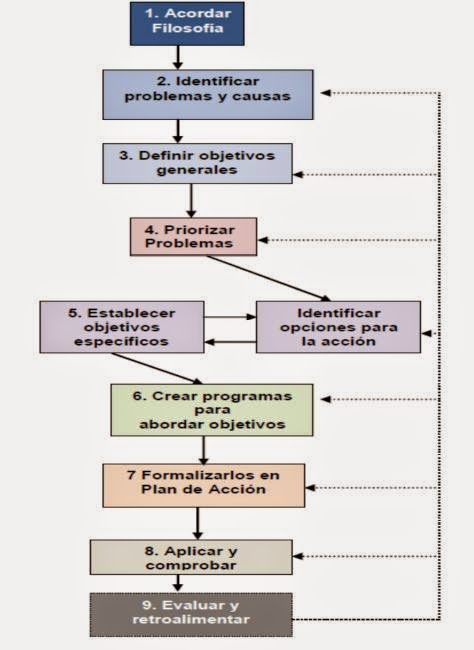
La AG21L debe entenderse como un proceso de naturaleza circular e iterativa. No tiene sentido hablar de un comienzo y un final al que se llega después de haber superado un número determinado de etapas. Debe entenderse más como un proceso de dirección y gestión estratégicas que como el resultado de sumar planes o programas de diferentes áreas. La AG21L debe entenderse como una disciplina, en el sentido de instrucción, aprendizaje y educación ambiental de la comunidad, cuyo objetivo, en último término, es promover el pensamiento y la acción ciudadana para mejorar la calidad del entorno.

Proceso de creación de una AG21L

—-
Existen distintas iniciativas que tienen como sujeto de actuación el municipio, como el programa “Hábitat” de Naciones Unidas, la campaña europea “Ciudades Sostenibles” (Carta de Aalborg) y el programa “Urbal”, que consiste en un proyecto auspiciado por la Unión Europea para el control y la gestión de la urbanización en ciudades de Europa y América Latina.
—-

Las Corporaciones Locales tienen competencias en varios aspectos que inciden en la calidad ambiental del municipio. En la Ley 7/1985 Reguladora de las Bases de Régimen Local, los artículos 25 y 28 establecen las competencias de carácter ambiental de las corporaciones locales:

“El municipio, para la gestión de sus intereses y en el ámbito de sus competencias, puede promover toda clase de actividades y prestar cuantos servicios públicos contribuyan a satisfacer las necesidades y aspiraciones de la comunidad vecinal”

Dicha Ley enumera una serie de competencias entre las que destacamos las siguientes:

  • Protección Civil, prevención y extinción de incendios
  • Protección del medio ambiente
  • Suministro de agua y alumbrado, servicios de limpieza, recogida y tratamiento de residuos
  • Alcantarillado y tratamientos de aguas residuales

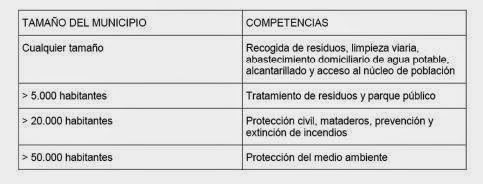
Según la población del municipio, las competencias mediaoambientales son:

¿Qué se está haciendo en Castilla y Léon?

Friedensreich Hundertwasser – El reino de la paz

Este arquitecto austriaco nació en 1928 y fue precursor en muchos temas de arquitectura que hoy son tendencia: rechazo de las líneas rectas, colores brillantes, formas orgánicas y biomórfica, una reconciliación de los humanos con la naturaleza y un fuerte individualismo, techos verdes, árboles dentro de las casas, vidrieras con botellas recicladas,…
 

¿Por qué el precio de petróleo ha bajado?

Ya conocéis mi pequeña obsesión; el precio del crudo. Hoy en el blog de Energy Matters he encontrado esta excelente explicación sobre el porqué de la bajada del precio del petróleo.

———-

  • In February 2009 Phil Hart published on The Oil Drum a simple supply demand model that explained then the action in the oil price. In this post I update Phil’s model to July 2014 using monthly oil supply (crude+condensate) and price data from the Energy Information Agency (EIA).
  • This model explains how a drop in demand for oil of only 1 million barrels per day can account for the fall in price from $110 to below $80 per barrel.
  • The future price will be determined by demand, production capacity and OPEC production constraint. A further fall in demand of the order 1 Mbpd may see the price fall below $60. Conversely, at current demand, an OPEC production cut of the order 1 Mbpd may send the oil price back up towards $100. It seems that volatility has returned to the oil market.
Figure 1
An adaptation of Phil Hart’s oil supply demand model. The blue supply line is constrained by data (see Figure 4). The red demand lines are conceptual. Prior to 2004, oil supply was fairly elastic to changes in price, i.e. a small rise in price led to a large rise in production. This is explained by OPEC opening and closing the taps. Post 2004, oil supply became inelastic to price, i.e. a large change in price led to marginal increase in supply. This is explained by the world pumping flat out. Demand tends to be fairly inelastic and inversely correlated with price in that high price suppresses demand a little. Supply and price at any point in time is defined by the intersection of the supply and demand curves. 72 Mbpd and $40 / bbl in 2004 became 76 Mbpd and $120 / bbl in 2008 as demand for oil soared against inelastic supply.
Figure 2
Followers of the oil market will be familiar with the recent evolution of oil supply and price shown in Figure 2.
Figure 3
What is less widely appreciated is that a cross plot of the data shown in Figure 2 results in the well-ordered relationship shown in Figure 3. Oil supply and price are clearly following some well established rules. This relationship led to Phil Hart developing his model shown as Figure 1.
Figure 4
Separating the data into two time periods brings more clarity to the process at work. The data define a fairly well-ordered time series beginning at January 1994 at the bottom left rising slowly to January 2004 and then steeply to the Olympic Peak of July 2008. The financial crash then caused the oil price to give up all of its gains returning to 2004 levels by December 2008.
Figure 5
The second time period from January 2009 to the present shows some different forces at work. Starting in 2009 some new production capacity was built. This was not in OPEC and is concentrated in N America where the light tight oil (LTO) boom took off supplemented by steady expansion of tar sands production. Prior to 2009, the production peaks were of the order 74 Mbpd. Post 2009 peaks of the order 77 Mbpd were achieved. About 3 Mbpd new capacity has been added. In May 2011 there is a significant and curious excursion to lower production not accompanied by a fall in price. This coincides with Libya coming off line for the first time and the loss of 1.6 Mbpd production. It seems possible that this coincided with weak demand and the fortuitous loss of production cancelling weak demand leaving price unchanged.
The EIA are always running a few months behind with their statistics these days, not ideal in a rapidly changing world. Thus we do not yet have the data to see the recent crash in the oil price. But we know the price has fallen below $80 and production is unlikely to be significantly changed. So, how do we explain production of roughly 77 Mbpd and a price below $80?
Figure 6
Figure 6 updates Phil Hart’s model (Figure 1) to take account of the oil supply and price movements of the last 5 years. Capacity expansion is achieved by adding 3 Mbpd to the former, well-defined supply-price curve (blue arrow). There is no a-priori reason that this curve should hold in the new supply-price regime, but for the time being that is all I have to work with. The red lines, as described in the caption to Figure 1, conceptually represent inelastic demand where high price marginally suppresses demand for oil. The recent past has seen oil priced at $110 with supply running at about 77 Mbpd as defined by the right hand red coloured demand curve. Reducing demand by about 1 Mbpd brings the price below $80 / bbl (red arrow).
The Recent Past and the Future
Old hands will know that it is virtually impossible to forecast the oil price. The anomalous recent price stability of $110±10 I believe reflects great skill on the part of Saudi Arabia balancing the market at a price high enough to keep Saudi Arabia solvent and low enough to keep the world economy afloat. The reason Saudi Arabia has not cut production now, when faced with weak global demand for oil, probably comes down to their desire to maintain market share which means hobbling the N American LTO bonanza. Alternatively, they could be conspiring with the USA to wreck the Russian economy? But Saudi Arabia is not the only member of OPEC and the economies of many of the member countries will be suffering badly at these prices and that ultimately leads to elevated risk of civil unrest. It is not possible to predict the actions of the main players but it is easier to predict what the outcome may be of certain actions.
If demand for oil weakens by about a further 1 Mbpd this may send the price down below $60 / bbl.
If OPEC cuts supply by about 1 Mbpd at constant demand this may send the price back up towards $100 / bbl.
Prolonged low price may see LTO production fall in N America and other non-OPEC projects shelved resulting in attrition of non-OPEC capacity. This may take one to two years to work through but with constant demand, this will inevitably send prices higher again.
Prolonged low price may see many specialist LTO producers default on loans, risking a new credit crunch and reduced LTO production. This would likely lead to a major consolidation of operators in the LTO patch where the larger companies (the IOCs) pick up the best assets at knock down prices. That is the way it has always been.
Black Swans and elephants in the room – with conflict escalation in Ukraine and / or Syria-Iraq and a new credit crunch, all bets will be off.

+ Full post

Crianza del agua

Nosotros no somos ni más ni menos que la madre agua, 
porque nosotros mismos somos agua (Katsa)
“En tiempo adelante cuatro gotitas de agua, que eran hermanas, vivían en el cielo. Un día  decidieron hablar con Atsilyaya y Atsilmama para que les permitan bajar al mundo. Los dioses les escucharon con amor y aceptaron su pedido.
La primera gotita bajó al mundo en pleno día y se convirtió en un arco de múltiples colores que se “paró” en el mundo alzando su cabeza por sobre las montañas.
La segunda gotita bajó y cayó sobre el mundo, de pronto, sintió que entraba y corría por debajo de la tierra en medio de la oscuridad; y a lo lejos vio una luz, se apresuró y al salir brotó como una vertiente.
La tercera gotita bajó al mundo y cayó sobre una montaña y sintió que su cuerpo se endurecía como una piedra. Más tarde con el calor del padre sol sintió que su cuerpo se ablandaba y empezó a bajar por la montaña como un río.
La cuarta gotita también se disponía a bajar al mundo, cuando los dioses le dijeron: ‘Espera, no bajes todavía. Tú vivirás en el cielo, podrás bajar al mundo cada vez que quieras, pero siempre regresarás al cielo en forma de nube’”. (Cachiguango, José Antonio. 2005)
Kashyapa Yapa recopila prácticas ancestrales sobre la crianza de agua en la región de los Andes, conocimientos milenarios para la gestión y el cuidado de la fuente de toda vida; el agua.
Una lectura que abre las puertas, que nuestro estilo de vida ha cerrado a la naturaleza, una lectura muy recomendable.

There are environmental limits to economic growth

Economist Paul Krugman evidently feels irked and irritated by the notion that there might be limits to economic expansion: he has followed up his New York Times op-ed of September 18 (“Errors and Emissions,” to which I replied here) with a new piece titled “Slow Steaming and the Supposed Limits to Growth. It’s interesting to examine his latest assertions and arguments one by one, as they reveal a great deal about how economists think, and why they tend to disregard physical science when it comes to questions about finite resources and the possibility of infinite economic growth on a small planet.
Mr. Krugman begins by noting: “We seem to be having a moment in which three groups with very different agendas—anti-environmentalist conservatives, anti-capitalist people on the left, and hard scientists who think they are smarter than economists—have formed an unholy alliance on behalf of the proposition that reducing greenhouse gas emissions is incompatible with growing real GDP.” He omits mentioning a fourth group—ecological economists like Herman Daly, who take the position that, in the real world, the laws of physics and ecological limits trump economic theory. For Krugman, only mainstream economists are to be trusted; everybody else is prone to misconceptions. He seems perplexed why so many people are coming to the same mistaken conclusion from different directions. Could it be that they are all recognizing an unavoidable physical reality?
Next Mr. Krugman fires a volley at physicist Mark Buchanan’s recent essay, Economists are blind to the limits of growth. Back in the 1970s, Krugman’s mentor, Bill Nordhaus, led mainstream economists in denouncing the classic book Limits to Growth. Unfortunately for Krugman, Nordhaus’s attack looks in retrospect like mere hand-waving: analysis of relevant data from the last 40 years shows that the most pessimistic scenario from the 1972 Limits to Growth study is tracking reality quite closely.
Mr. Buchanan’s pithy piece zeros in on energy as the most important limit to endless economic expansion. But even though he carefully explains that we are getting more efficient at using energy (and balances that recognition with evidence that, despite this, economic growth implies using more energy overall), Mr. Krugman pretends that physicists have never heard of energy efficiency. He spends most of his op-ed explaining one instance (ocean-going freighters reducing their speed to use less fuel) as if this were proof of a new and pivotal principle that no hard scientist had previously noticed. Are there instances where we can use less energy while achieving the same effect? Of course! A better, though more shop-worn, example would be lighting: as a result of the introduction of compact fluorescent and LED lights, we’ve seen dramatic reductions in the amount of energy used to banish darkness from cities and homes.
But Mr. Krugman doesn’t follow through on his argument. If he is implying that there are no limits to growth because energy use can be made more efficient, then logically he must also argue that energy efficiency can be improved endlessly—at least to the point at which no energy at all is needed in order to run the economy (I say “at least,” because presumably even then further growth would be needed in order to prove the non-existence of limits). But of course that’s pure fantasy, as every physicist knows. Energy is defined as the ability to do work, and the ability to do work is what generates GDP. Energy efficiency can often be improved, but such improvements are subject to the law of diminishing returns: the first five percent of improvement is cheap, the next five percent costs more, and so on. Perfect efficiency in any process is either impossible to achieve, or infinitely expensive (depending on how you prefer to look at it).
My guess is that if and when Mr. Krugman honestly confronts the logical impossibility of infinite growth within a finite system, and the similar impossibility of infinite improvements in energy efficiency, he will retreat to saying something along the lines of, “Yes, but even if there are theoretical limits to growth, we’re very far from reaching them, so they’re practically irrelevant for the time being.” However, once one acknowledges that there are indeed theoretical limits to expansion, one must then ask, “What would be the likely signs that we are approaching those limits?”
I’ll suggest some: overall rising energy costs (indeed, energy production consumes a larger proportion of global GDPtoday than it did a decade ago); falling yields of minerals per unit of energy applied to mining and refining (this is now true almost across the board, from antimony to zinc); rising environmental costs and risks from industrial processes (see “climate change”).
Mr. Krugman writes: “So where does the notion that energy is somehow special come from? Mainly, I’d say, from not thinking about concrete examples . . . because if you think about actual economic activities even briefly, it becomes obvious that there are tradeoffs that could let you produce more while using less energy.” Again, that’s a statement no one would argue with. But Krugman’s own example of energy efficiency highlights the fact that there are often hidden costs to efficiency efforts. He writes that “After 2008, when oil prices rose sharply, shipping companies . . . responded by reducing the speed of their ships. It turns out that steaming more slowly reduces fuel consumption more than proportionately to the reduction in speed.” But moving ships slower meant deploying more ships to in order move the same amount of freight—thus substituting capital and labor for energy. This strategy didn’t require the development of new technology; the shippers were “just using the same ships differently.”
In the comments to Mr. Krugman’s op-ed on the New York Times website, Ken White (one of my colleagues at Post Carbon Institute) points out that all those extra ships represent plenty of embodied energy, which was expended in extracting and refining ores and in other aspects of ship construction. When we look at many (not all) efficiency gains this way—that is, from a systems perspective—much of the advantage tends to disappear. Does the added cost of embodied energy in this case equal the energy of the fuel saved? I don’t have the data and haven’t done the calculations, but even if there are some net savings they are probably much smaller than Krugman assumes. You can substitute capital and labor for energy in some instances and up to a point, but there is literally nothing that anyone can do without some expenditure of energy. Substitution itself is subject to limits.
Mr. Krugman clearly implies that it is only mainstream economists who think about concrete examples like the one just discussed; in contrast, hard scientists deal just in airy abstractions. For physical scientists, this must be surprising news, as most of them deal with concrete examples on a daily basis.
Here are some concrete examples:

Why is Mr. Krugman leading a crusade against the idea of environmental limits to economic growth? I believe there’s a political agenda at work here, and that it’s driven by laudable sentiments. I normally hesitate to guess at other people’s motives, but in this instance they are rather plainly implied in Krugman’s two opinion pieces cited above. He evidently is deeply concerned about climate change and wants to see humanity avert the worst likely impacts, but he believes that policy makers can never be persuaded to adopt climate protection policies if that requires reining in economic growth. He writes: “[T]here’s a lot of room to reduce emissions without killing economic growth.” Yes, there’s room.According to a study Krugman himself cited in his previous op-ed, the first 10 percent of emissions cuts can be achieved without much pain. But beyond that, they’re all at a net cost to the economy.
Like Paul Krugman, we at Post Carbon Institute are deeply concerned about climate change and want officials to adopt policies to avert it. It’s true: if informed opinion leaders pretend that full climate protection can be achieved without any real cost, politicians are more likely to sign on to available no-cost policies. But they’ll only be agreeing to weak pledges that will fail to achieve the levels of emissions cuts that are actually required. By misleading policy makers and the general public this way, we merely waste time and opportunity.
By acknowledging that climate change is a serious threat to humanity’s future, Mr. Krugman is in effect acknowledging the existence of environmental limits to economic expansion. He would probably object that climate change is merely a limit to a fossil-fueled economy, and that a renewably-energized economy could happily expand forever. But once we open the limits box and peer inside, a long series of other critical boundaries quickly comes to light.
Let’s get real. The Earth is a bounded sphere, and the human economy is an engine that extracts raw materials and produces waste. If we keep that engine’s operation within the bounds of what our planet can absorb or replenish through its normal ecosystem functions, all is well. But if the economy continues to grow year after year, at some point the planet’s systems will be overwhelmed—even if we’re using renewable energy to extract and transform raw materials. Our uses of energy and materials can be made somewhat more efficient, but only up to a point. If the Earth itself were expanding at an ever-increasing rate, perpetual economic growth would pose no problem. Yet last time I checked, the planet hadn’t gotten any bigger—while our demands upon it continue to increase.
In his latest op-ed, Mr. Krugman derides “hard scientists who think they are smarter than economists.” I can think of several snide responses to that characterization, but actually I don’t think one is required. The phrase speaks volumes about economists’ own hubris.

Networked, open-source, open-access, exponentially-increasing productivity in the hands of the masses…

I’ve just returned from an eye-opening, mind-expanding week in Leipzig at the 4th Annual global Degrowth congress. This vibrant gathering brought together over 3,000, mostly young, ‘prosumer’ activists and practitioners from a variety of new economy movements.
While there I learnt a huge amount from makers, hacktivists, anarcho-syndical cooperativists, collaborative-commoners, anti-capitalists, free-culturalists, buen-vivir, transitioners, Fab-Lab-ers, p2p-ers and social-entrepreneurs from places as diverse as Spain, India, Bolivia and Brazil. And continuing the theme of new economics, on the train back I read Jeremy Rifkin’s important new book the «The Zero Marginal Cost Society – the internet of things, the collaborative economy, and the eclipse of capitalism.»
In preparation for Degrowth I also spent three days in Meissen on a deep-dive with a small group of p2p and commons movement leaders including David Bollier andMichel Bauwens who, in the introduction to his book, both praise Rifkin as a visionary of a new world order.
I was in Germany as part of the research and outreach for work on the Real Economy Lab, an initiative that aims to help connect theory and practice through a collaborative mind-mapping of the wider ecosystem of the post-growth new economy movement. The hope is that this process can form the start of a global alliance building to converge these various new economy movements into one force for good.
Germany was a good place to start as its probably the country furthest ahead in the combination of the Internet of Things, renewable, decentralized and community controlled energy, grassroots commons activists and ‘makers’.
One thing everyone I met have in common is a desire to create a new world order, a new way of creating, connecting and being which is beyond the market, beyond ownership, growth and capitalism. To them the idea of working for a large company for a wage has just never even been on the radar. Indeed the idea of large, shareholder owned private enterprises doesn’t feature in the world they are co-creating. Many of them have also conceptually, and in some cases, such as Cooperativa Integral Catalana, literally moved beyond any real relationship with politics and the state. Indeed, even the cutting edge of politics, Citizen-democracy parties like Partido X and Podemos, are running fast just to try to keep up with the convergence of these movements.
Emerging from this convergence is a powerful vision of a new world order and paradigm which represents real hope of building a bottom-up safety-net to catch the ever-more fragile top-down, as it unravels and collapses around us.
The new paradigm these movements are creating is post-enlightenment, lateral not hierarchical, chaordic, networked, decentralist, inclusive, open, rebellious and fun. It represents a near future that will test and fail much of the incumbent and dying models of politics and business. And it cocks a snoot at the Lockean, Millian and Social-Darwinian paradigm and story that has so atomised, excluded and isolated us from each other and so ravaged the planet.
What have till now been separate movements of the co-operative, commons, p2p, Transition and Makers are converging and learning that they have much in common and that if they stand and develop together they can be more than a side-show and thorn-in-the-side of the mainstream — they can become the mainstream in a new post capitalist, post growth world.
Jeremy Rifkin’s new book The Zero Marginal Cost Society is, along with Naomi Klein’s new «This Changes Everything – capitalism versus the climate,» a current must read. It documents an on-going shift to what Rifkin calls the Third Industrial Revolution. And it summarizes much of what I experienced last week in Leipzig about the coming together of the Internet of Things (IoT), the p2p worlds, the collaborative-commons and new economy movements.
Rifkin points to a central contradiction of capitalism which I find a useful addition to the new economy theories of people like Professors Schweickart, Olin-Wright and Alperovitz. This is that capitalism’s inbuilt dynamism drives it necessarily, if left to a truly free market, towards near-zero marginal costs of production for additional production units — what Rifkin calls ‘extreme productivity’. The implications of this are revolutionary — once at near-zero the system’s inbuilt dynamics stall and start to unravel — «goods an services become nearly free, the exchange of property on markets shuts down and the capitalist system dies».
Thus the very DNA of capitalism, that which has made it such a success, has within it its own lethal sting in the tail. Its designed to kill itself. And to kill off any enterprise, such as the private shareholder owned corporate, reliant on its continuing. Capitalism has done its job and made itself redundant. If only we had made it to where we are now, on the edge of near-zero marginal costs, and the new economy it heralds, maybe40 years ago, we might not now be in our nose-dive into possibly unstoppable, runaway climate chaos.
Rifkin’s view is that we are seeing the eclipsing of capitalism as a system and that incumbent centralised and vertically integrated profit-orientated businesses, whilst they will try to mimic, learn from and slip-stream this new order, will at best be carried only a short way on this journey to the new economy. Certain sectors like energy, health, finance and consumer products are first in the firing line. Some nimble incumbents in other sectors may morph into new forms of enterprise that can flourish within the new order.
The idea that we could soon all be able to 3D print our own homes, cars, clothes using open-access, open-source code, near-free energy and resources in local Fab Labs is mind-blowing but a near reality. It blows the hierarchical, inequality based current economy out of the (3d printed) bathtub. If done with a close eye on ecological limits it could herald a true circular economy.
I’ve long though the next paradigm will need to go beyond the tired state versus market, capitalism versus socialism debate and, as Rifkin says «the young collaborationists are borrowing the principles virtues of both the capitalists and the socialists, while eliminating the centralising nature of both the free market and the bureaucratic state». I’m not sure what Marx would have made of the idea of the shift from exchange-value to ‘shared-value’, nor where this sits vis a vis ‘use value’ but as Rifkin says «The rule book that governs a market exchange economy becomes far less relevant to the life of society» in what he sees as the soon-to-be dis-enclosure of the means of production and the eclipsing of capitalism by the collaborative commons.
The vision of networked, open-source, open-access, exponentially-increasing extreme productivity in the hands of the masses, not private interests, is of course manna from heaven. I’m not entirely convinced by all of Rifkin’s logic. His future seems a world covered in endless Pv farms and wind turbines and his thinking on decoupling seems untested and incommensurable with the reality of the scale and intensity of energy and carbon reductions needed to keep us from a 4 degree world. But there is much in here which rings true.
Rifkin’s thinking dovetails nicely with Klein’s latest book which is also about the eclipsing of capitalism by people-power. Indeed Klein champions many of the movements I met in Leipzig and gave a keynote address to the congress.
This p2p, people-powered revolution in commerce, economics and democracy is all emergent stuff. Whilst experimentation is flourishing and producing real impact, the social and movement networks are not yet fully connected into a coherent global alliance. And as yet they don’t have an over-arching vision, narrative and route-map which can inform their various trajectories and combine to build a progressive antiShock Doctrinaire alternative to the unravelling of our current systems.
But after what I’ve seen and heard this week I’m ever more optimistic. I feel a bit like I’ve just been plugged into the Matrix – only its not malign and its in our control. I’ve seen the future and it’s Fab-ulous.

Alternative Energy Fetishes and Temples to Technology

Another point of view to think about….
«I’ve become rather jaded at the stream of ever-worsening environmental reports these days. Surely if we had some sort of techno-fix to halt the cascade of biospheric tipping points we have breached, we would have deployed them by now. Nevertheless, the carrot of a civilization-saving technological breakthrough is forever dangled before our eyes. By all accounts, we appear hellbent on doing everything humanly possible to maintain and perpetuate industrial civilization by deploying “earth-friendly” renewable energy technologies which, in the end, turn out to be nothing more than “reconstituted fossil fuels”.
The role that fossil fuels play in the creation, maintenance and support of alternative energy technologies is not discussed or analyzed at all by those peddling it to the masses who live with the hope of a “green” economy and carbon-neutral civilization. From the massive mining operations and manufacturing processes necessary to extract the rare earth metals essential in constructing wind turbines, solar panels, and electric car batteries to their daily maintenance, de-activation, and final discardment, the amount of fossil fuel energy embedded in the entire life cycle of such alternative energy technologies renders moot their benefits when compared to what is actually more effective in solving our energy and climate conundrum —reducing our consumption through energy efficiency improvements and waste reduction programs. Alternative energy technologies cannot replace our dependence on fossil fuels and are, in the final analysis, diverting us from coming to grips with a way-of-life that cannot go on for much longer. We have a consumption crisis.
Here is an excerpt from a must-see talk by engineer and energy analyst Ozzie Zehner, author of Green Illusions:
“Common knowledge presumes that we have a choice between fossil fuels and green energy, but alternative energy technologies rely on fossil fuels through every stage of their life cycle. Most importantly, alternative energy financing relies ultimately on the kind of economic growth that fossil fuels provide. Alternative energy technologies rely on fossil fuels for raw material extraction, for fabrication, for installation and maintenance, for back-up, as well as decommissioning and disposal. And at this point, there’s even a larger question: where will we get the energy to build the next generation of wind power and solar cells? Wind is renewable, but turbines are not. Alternative energy technologies rely on fossil fuels and are, in essence, a product of fossil fuels. They thrive within economic systems that are themselves reliant on fossil fuels.
Now, I’m no fan of fossil fuels. Fossil fuels are finite and dirty, but we use them for five principal reasons. Fossil fuels are dense. Their energy is storable, portable, fungible (which means they can be easily traded), and they are transformable into other products like pesticides, fertilizers, and plastics.

Now, these qualities cannot be measured in kilowatts, so what happens when we spend our precious fossil fuels on building alternative energy. Well then we get energy that is not dense, but diffuse. It’s not easily storable. It’s not portable. It’s not fungible. And it is non-tranformable.

Now to increase the quality of the energy, we then have to spend more fossil fuels to build batteries, to build back-up power plants, and other infrastructure. And of course this is incredibly expensive. Ultimately that expense represents the hidden fossil fuels behind the scene.
There’s an impression that clean energy can supply a growing population of high consumers. There’s an impression that alternative energy can displace fossil fuel use, but the evidence doesn’t show that.»