Svalbard Global Seed Vault – Bóveda del fin del mundo

If you were one of the most wealthy countries in the world and you were managing one of the biggest sovereign funds of our planet, would you consider creating the biggest seedbank ever to provide insurance against the loss of seeds in a global crises or after a continuous genetic modification of our seeds?
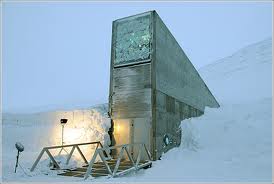
Norway did. With a cost of  US$9 million they have built the largest seedbank of the world, in a northern island of the Greenland Sea, that is managed in colaboration with the Global Crop Diversity Trust.
But is it a non profit organization? Would anyone be able to use those seeds? No, of course not.
The seed samples stored in the seed vault are copies of samples stored in the depositing genebanks. Researchers, plant breeders and other groups wishing to access seed samples cannot do so through the seed vault; instead they must request samples from the depositing genebanks. The samples stored in the genebanks will, in most cases, be accessible in accordance with the terms and conditions of the International Treaty on Plant Genetic Resources for Food and Agriculture, approved by 118 countries/parties.
The seed vault functions like a safe deposit box in a bank. The bank owns the building and the depositor owns the contents of his or her box. The Government of Norway owns the facility and the depositing genebanks own the seeds they send. The deposit of samples in Svalbard does not constitute a legal transfer of genetic resources. In genebank terminology this is called a «black box» arrangement. Each depositor signs a Deposit Agreement with NordGen, acting on behalf of Norway. The Agreement makes clear that Norway does not claim ownership over the deposited samples and that ownership remains with the depositor, who has the sole right of access to those materials in the seed vault. No one has access to anyone else’s seeds from the seed vault. The database of samples and depositors is maintained by NordGen.
The value of those seeds cannot be determined by money. What is the cost of biodiversity? What is the cost of life in Mother Earth? A seed bank is an invaluable asset that each community should have for the future, for the next generations, for securing our lives against GMO, global crises, Government regulations agains seed storing… a seed bank means freedom and life.

+ information

Millenium Seed Bank
Convention on Biological Diversity
Index Seminum

What's wrong with us women??

During the last days I have seen a couple of videos showing the poor image women have of ourselves. We are told by the media how we should be, what beauty is, how we should look…

Beauty is inside of us, don’t let yourself be influenced by any industrial standard, cause they do not apply to us and they should never modify our individuality.

Standing for what we are, we can realise we are more beautiful than we think.

Desiderata

Cause today is as good as any other day…a simple homage to the beauty of words, of music, of the nature that surrounds us,… cause luckily there’s a real life beyond mass media.
«Go placidly amid the noise and haste, and remember what peace there may be in silence. As far as possible without surrender be on good terms with all persons. Speak your truth quietly and clearly; and listen to others,even the dull and the ignorant; they too have their story. Avoid loud and aggressive persons, they are vexations to the spirit. If you compare yourself with others, you may become vain and bitter; for always there will be greater and lesser persons than yourself. Enjoy your achievements as well as your plans. Keep interested in your own career, however humble; it is a real possession in the changing fortunes of time. Exercise caution in your business affairs; for the world is full of trickery. But let this not blind you to what virtue there is; many persons strive for high ideals; and everywhere life is full of heroism. Be yourself.Especially, do not feign affection. Neither be cynical about love; for in the face of all aridity and disenchantment it is as perennial as the grass. Take kindly the counsel of the years, gracefully surrendering the things of youth. Nurture strength of spirit to shield you in sudden misfortune. But do not distress yourself with dark imaginings. Many fears are born of fatigue and loneliness. Beyond a wholesome discipline, be gentle with yourself. You are a child of the universe, no less than the trees and the stars; you have a right to be here. And whether or not it is clear to you, no doubt the universe is unfolding as it should. Therefore be at peace with God, whatever you conceive Him to be, and whatever your labors and aspirations, in the noisy confusion of life keep peace with your soul. With all its sham, drudgery, and broken dreams, it is still a beautiful world. Be cheerful. Strive to be happy.»
Max Ehrmann, «Desiderata»
Porque hoy tocaba…un tributo a la belleza de las palabras, de la música, de la naturaleza que nos rodea… Porque afortunadamente hay una vida más allá de los mass media.

«Camina plácido entre el ruido y la prisa, y piensa en la paz que se puede encontrar en el silencio. En cuanto sea posible y sin rendirte, mantén buenas relaciones con todas las personas. Enuncia tu verdad de una manera serena y clara, y escucha a los demás, incluso al torpe e ignorante, también ellos tienen su propia historia. Evita a las personas ruidosas y agresivas, ya que son un fastidio para el espíritu. Si te comparas con los demás, te volverás vano y amargado pues siempre habrá personas más grandes y más pequeñas que tú. Disfruta de tus éxitos, lo mismo que de tus planes. Mantén el interés en tu propia carrera, por humilde que sea, ella es un verdadero tesoro en el fortuito cambiar de los tiempos. Sé cauto en tus negocios, pues el mundo está lleno de engaños. Mas no dejes que esto te vuelva ciego para la virtud que existe, hay muchas personas que se esfuerzan por alcanzar nobles ideales, la vida está llena de heroísmo. Sé sincero contigo mismo, en especial no finjas el afecto, y no seas cínico en el amor, pues en medio de todas las arideces y desengaños, es perenne como la hierba. Acata dócilmente el consejo de los años, abandonando con donaire las cosas de la juventud. Cultiva la firmeza del espíritu para que te proteja de las adversidades repentinas, muchos temores nacen de la fatiga y la soledad. Sobre una sana disciplina, sé benigno contigo mismo. Tú eres una criatura del universo, no menos que los árboles y las estrellas, tienes derecho a existir, y sea que te resulte claro o no, indudablemente el universo marcha como debiera. Por eso debes estar en paz con Dios, cualquiera que sea tu idea de Él, y sean cualesquiera tus trabajos y aspiraciones, conserva la paz con tu alma en la bulliciosa confusión de la vida. Aún con todas sus farsas, penalidades y sueños fallidos, el mundo es hermoso todavía. Sé cauto, esfuérzate por ser feliz».

The science of a sexless future

Have you ever thought about the role of women in our society. Why do we have that role? Is it genetic? Is it pure chemistry or is it social?
The fact is that as long as women plays the main role in reproduction, she will somehow be regarded as a men property, but that can change with science.
Aarathi Prasad was born in 1975 and has a PhD in biology, this interview with Punset, it’s worth watching, very though provoking.
https://www.rtve.es/swf/4.1.20/RTVEPlayerVideo.swf

Ideas para la repoblación de Castilla como una estrategia para salir de la crisis

Nos ha tocado vivir momentos emocionantes. Tiempos de cambio, de nuevos horizontes, de búsqueda y exploración. Debemos de asumir nuestra responsabilidad, la necesidad de evolucionar nuestro modelo social y económico. A estas alturas, pocos son los que no se dan cuenta de la fractura que se ha producido en un sistema que se demuestra insostenible e injusto. Pero la crisis es un oportunidad en sí misma, para provocar cambios, para progresar, para construir un futuro mejor. Es el momento de la creatividad, de la imaginación, de ser valientes. Esta entrada trata de reflexionar sobre la potencial oportunidad que se puede estructurar sobre la despoblación del entorno rural.
 
En estos días asistimos a la paradoja de tener unos pueblos cada día más despoblados, muchos completamente abandonados, mientras tanto, en las ciudades, los pueblos se observan como un destino cada vez más atractivo. En Castilla, el entorno rural vive uno de sus momentos más críticos. Entre la despoblación, los recortes del estado y la grave crisis económica de un modelo arrasado por la globalización basado en unos pilares muy débiles (subvenciones y turismo de de fin de semana), transmiten la sensación de estar a la deriva en medio de un temporal que no cesa…


Inspirándonos en el pasado
 
A veces la historia nos enseñó como se puede revertir una situación límite. Una de ellas ocurrió en la época de la reconquista a los árabes de la península ibérica  (años 711-1492) cuando los castellanos fueron capaces expulsar a los invasores creando un modelo económico y social que permitió repoblar Castilla, generando al mismo tiempo riqueza y cohesión social. Fue la época de la colonización de Castilla, los fueros y las comunidades. Siendo consciente de las distancias en el entendimiento de la vida entre esa época y la nuestra, todavía nos asombra como aquellos hombres fueron capaces de crear un entorno de progreso basado en la libertad en medio de los oscuros tiempos de la servidumbre feudal en Europa. Su coraje, capacidad de organización y fortaleza les llevaron mucho más lejos, a crear los primeros gremios y mercados, incluso a conquistar el mundo. Aquellas virtudes emergieron del atractivo de un modelo que permitía ser libres a los hombres, que se asociaron en comunidades de personas que buscaban un futuro mejor, el de su comunidad. 
 
Tomando como inspiración aquellos hechos, podemos intentar imaginar un relato que no está exento de una épica menor. El desierto del Duero existe hoy, Castilla está prácticamente despoblada. No solo por la época de la gran inmigración a la ciudad, sino porque la globalización ha dejado sin un papel principal a todos aquellos que no se cobijan en torno a una gran urbe.
 
La necesaria vuelta a la comunidad
 
Pero, en este relato existe una vía alternativa para salir de esta situación límite, accesible, directa, eficaz, contundente y definitiva. Los problemas a los que nos enfrentamos en estos momentos son tantos y tan grandes que es mucho más efectivo tratar de solucionarlos desde lo pequeño, lo manejable, desde pequeñas comunidades, de hecho, quizás es la única vía viable a corto plazo. Desde mi punto de vista, solo se puede salir de la situación  de colapso actual creando un entorno que ataque todos los puntos críticos al mismo tiempo, algo que desde lo macro (llámalo estado, gobierno, nación, unión de países,…) nos muestra hasta el momento su fracaso más estrepitoso.
 
En este relato la primera meta pasa por buscar, adquirir y tomar la libertad. Para ser libres solo hay un camino: la independencia económica. Cualquier planteamiento que no esté basado en ser capaces de generar una economía sostenible para la comunidad no será efectivo y será imposible que tenga éxito. Aquí reside la primera clave. 
 
El desarrollo de una nueva economía: la economía del conocimiento
 
El entorno rural es idóneo para el desarrollo de la economía del conocimiento, esa que parece ser que es el futuro que viene. Mucho más que el entorno urbano, aunque parezca lo contrario, porque ningún planteamiento de futuro puede tener consistencia si no incluye el vector medioambientalista y de localización económica, dos líneas de actuación que articuladas adecuadamente dentro de la ya existente sociedad red, pueden y deben convertirse en la base de el nuevo relato
 
Es momento de imaginar, de soñar, de compartir, buscando conseguir innovar. Del pensamiento lateral, de romper moldes, del riesgo. La forma de vida de los últimos decenios ha terminado. El mayor riesgo es no hacer nada. Viene otra cosa. Inventemosla. Este proceso es posible acometerlo desde las comunidades y las redes,  que ya hace tiempo han sustituido a los antiguos líderes y a los procesos jerárquizados. La creatividad es la materia prima de esta nueva sociedad del conocimiento. Esta es la segunda clave.
 
La Castilla de las Comunidades
 
Otro factor nos lleva a pensar que el campo de Castilla es perfecto para implementar esta estrategia: el tamaño de sus pueblos. Pueblos de entorno a 150-200 habitantes formaban el entorno rural de las comunidades de Castilla, una cifra que los expertos en antropología fijan como el tamaño de la tribu, la organización más básica y efectiva que ha existido nunca en la historia del ser humano, porque permite un escala de organización altamente eficiente en la explotación de los recursos y la gestión social.
 
Varios pueblos formaban una Comunidad, con el centro en una población mayor (de unos 1500-2000 personas), donde estaba el centro de gestión administrativa y los mercados. Cada Comunidad acordaba las leyes que la regían. Si no te gustaban, te ibas.  
 
Lo potente de este tipo de organización reside en que surge de forma cuasi-espontánea, se extiende como una red y es muy flexible, lo que la convierte en óptima para adaptarse a cambios profundos y rápidos, el entorno que con toda seguridad nos tocará vivir en las próximas décadas.

Tras estas divagaciones preliminares en busca de mi propia inspiración, lanzo una serie de ideas que pueden ayudar a inspirar a otros soñadores, a algunos proyectos, a personas desempleadas o a emprendedores en potencia… 

– Mercado de casas y tierras
 
Muchas veces lo más sencillo es lo primero que falla. Cuando una persona de la ciudad se pone a buscar un pueblo para comprar casa y/o tierra, se encuentra que la información es difícil de encontrar. Aquí hay una idea potente para un negocio privado, también una idea para los Grupos de Acción Local, se trata de crear mercados comarcales de compra-venta-alquiler de bienes raíces. El valor añadido para compradores y vendedores es obvio. Los clientes existen, solo hay que darles un buen servicio.
 
– Facilitar las licencias y permisos
 
Como norma general, cualquier persona que haya comprado, vendido o construido una casa en un pueblo, contaría una experiencia similar: la burocracia es brutal, las tasas altísimas, el proceso administrativo largo y complejo… Uno de los aspectos en los que mejor se puede observar el fallo del estado en estos momentos, es este punto crucial. El municipio que quiera ser capaz de atraer repobladores y talento, y por tanto, crecer su economía, tiene que resolver de forma indudable las antiguas losas administrativas que todavía a estas alturas estrangulan la iniciativa y el desarrollo del mercado. Sobran procesos, trabas y costes. Falta voluntad de servicio público a la comunidad.
 
– Autoproducción
Un cambio esencial se está produciendo en el sistema de producción. La superespecialización de la era industrial y la globalización tiene sus días contados. En la sociedad del conocimiento, la comunidad se convierte en el agente económico principal, combinando conocimiento, producción y consumo, en el entorno comunitario, que tendrá un ámbito local físico y global virtual. El factor trabajo se convierte en la clave, el factor capital pierde importancia, ya que la propia comunidad puede ser capaz de generar crédito entre sus miembros. Todo lo que se pueda producir a nivel local, debería de hacerse, tanto a nivel familiar como comunitario, por una simple razón económica (no ceder la plusvalía a algún lejano lugar en el mundo y poder generar riqueza en tu comunidad más cercana), por seguridad (reducir la dependencia del frágil mecanismo logístico de la sociedad industrial), por razones medioambientales (localizar la economía ayudará sustancialmente a frenar el deterioro medioambiental) y por principios éticos (el desconocimiento de los métodos de producción de buena parte de los productos que consumimos despierta grandes dudas sobre la ética que hay tras ellos). La autoproducción puede ser desde las necesidades básicas, cosechar tu propia energía, agua y alimentos, hasta los productos más sofisticados utilizando la fabricación P2P.

Si eres un teletrabajador o trabajas en internet, vivir en un pueblo será mucho más barato que la gran ciudad, y te permitirá autoproducir, consiguiendo ventajas económicas y de salud. También puede ser interesante para alguien que está en paro y tiene acceso a alguna vivienda de pueblo o tierras. Busca tu pueblo, crea tu comunidad.
 
– La nueva agricultura y ganadería ecológica
 
La búsqueda de la soberanía alimentaria es un derecho de los pueblos. La agricultura ecológica marcará en un futuro muy cercano la diferencia entre alimentarse saludablemente y a unos precios razonables, y sucumbir a las presiones inflacionistas, degradar el medio ambiente y destruir nuestra salud, con los alimentos globalizados que salen de las granjas industriales de animales o de los monocultivos extensivos de semillas transgénicas. Hoy en día hay un mercado importante de exportación para productos ecológicos para el norte de Europa. El actual sector agrícola-ganadero industrialista soportado por subvenciones no tiene ningún futuro. La agricultura y ganadería ecológica tiene ya un gran presente. 

Si eres experto en permacultura, agricultura ecológica o técnico agrónomo o forestal, puedes dedicarte a la formación y la consultoría. El tipo de explotación industrial del campo de Castilla en la actualidad tiene los días contados. Si eres un agricultor, puedes aprender e investigar como reciclar tus cultivos y acceder a un mercado mucho más rentable y interesante para el futuro.

– La nueva industrialización local
En internet existe un inmenso repositorio para poder construir casi cualquier cosa. Los espacios de hackers se convierten en lugares donde compartir conocimientos, experiencias y  maquinaria que pueda permitir fabricar a bajo coste productos industriales para el mercado local, como elementos para instalaciones renovables, o incluso para el mercado global. Este nuevo modo de producción se denomina Producción P2P, y algunos hablan ya de una nueva revolución industrial en ciernes. Además, se puede desarrollar otra industria con alto valor añadido: la artesanía y la expresión artística. 

Crear espacios para hackers en pueblos de Castilla puede ser una gran idea que complementa la economía de una comunidad. Cuanto más se consiga diversificar la generación económica, el modelo social será más sostenible. Si eres un ingeniero o un técnico, no puede haber campo más apasionante y accesible que crear un centro de innovación en mitad del campo de Castilla. La red te conectará con el resto del mundo.
– La gestión de  los residuos
 
Todo producto fabricado tendrá que incorporar un estudio del impacto medioambiental de su ciclo de vida. Esto es ya una tendencia imparable a nivel mundial que debemos de apoyar todo el mundo para tener información real de reciclabilidad de todos los productos. Toda comunidad que pretenda crear valor debe de intentar desarrollar un sistema de reciclaje integral. Es importante crear los vínculos necesarios entre la comunidad para poder reutilizar con mercados de segunda mano y de trueque. Siempre será el reciclaje más eficiente. 

En EEUU más de 200.000 personas trabajan en el ecosistema de compra-ventas de segunda mano de Ebay. Con esta plataforma o con otras de nueva creación, el campo de desarrollo del mercado de reutilización es inmenso. El diseño de los sistemas de reciclaje  (logística, gestión y reventa de materiales) requerirá expertos en medio ambiente, ingenieros y técnicos. 
– La globalización virtual: la sociedad red
 
La red permite crear mercados, acceder a la globalización virtual o crear comunidades transnacionales. Un blog y una red es suficiente para acometer cualquier proyecto. La red provee de conocimiento a la comunidad para localizar la economía y acaparar la plusvalía dentro de la comunidad. La sociedad red también es utilizable a nivel servicios públicos, donde algunas atribuciones clásicas del estado dejan de tener sentido ante la potencia de una organización comunitaria en red. 
El campo de trabajo y de investigación es infinito, y no solo para ingenieros informáticos, si no para prácticamente cada aspecto de nuestras vidas. Cualquier persona debe de ser capaz de desarrollar una identidad digital, algo que será vital en los próximos tiempos. Esa identidad facilita la creación de redes y la interactuación en la red. 

– Las nuevas fórmulas de organización comunal
 
El emprendimiento debe de ser colectivo, compartiendo esfuerzos y buscando complementariades. La figura de la sociedad cooperativa se consolida como la organización de futuro. No solo por la parte filosófica que implica, sino por su potencia como organización mucho menos dependiente del factor capital. En estos momentos estamos asistiendo al proceso creativo más importante de la historia humana que se materializa en una sucesión desbordante de innovaciones en todos los terrenos de la vida, provocado esencialmente por el desarrollo de la sociedad red.
 
Los servicios públicos deben de localizarse, como funcionó durante tantos siglos, preservando el conocimiento y la gestión local descentralizada, mucho más eficiente que cualquier tipo de organización centralizada. Desde mi visión, la clave es la gestión de recursos desarrollando la sociedad red y re-utilizando la capacidad productiva no aprovechada, o sea, los desempleados para cubrir las necesidades de la sociedad local. El absurdo de la situación actual con la escasez artificial que genera el dinero fiduciario controlado por el estado, donde por un lado se recorta y por otro lado el propio sistema condena al desempleo a parte de la población, se soluciona asignado a tareas productivas los recursos ociosos y otorgándolas un valor. Esto se puede organizar con un banco de tiempo o con la creación de una moneda social. Innovadores sociales, economistas y financieros pueden tener un campo de desarrollo increíble.

Mientras tanto seguiremos teniendo al estado, que todavía provee y proveerá durante mucho tiempo parte de los servicios que necesita la sociedad, pero debería de ser factible un sistema mixto, estatal-comunitario, donde deben de «negociarse» la gestión de la financiación de las necesidades que requiere la comunidad. La organización mutualista se consolida también como una forma eficiente de organizar algunos servicios vitales para la comunidad como podrían ser la sanidad y la educación. 
 
Entrada original (Asociación de Vecinos de Vellosillo)

Water crisis – The path to P2P water

Water.org
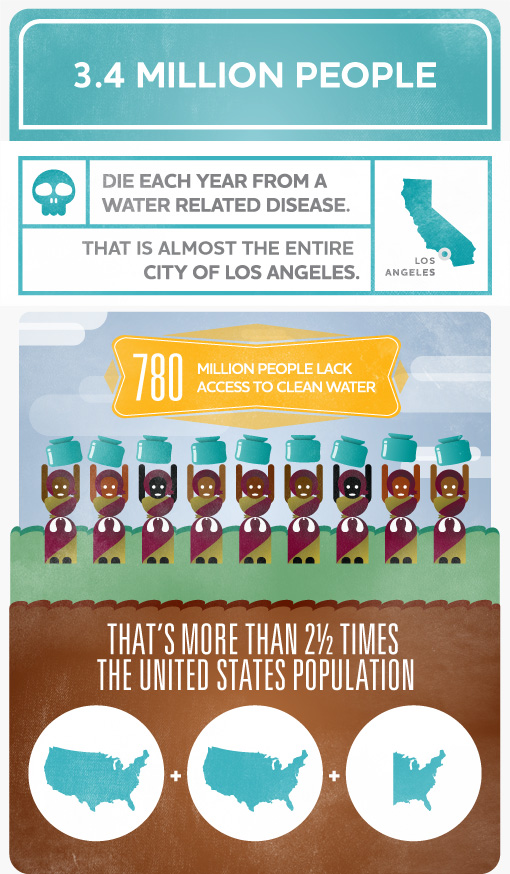
Every 20 seconds, a child dies from a water-related illness.Women spend 200 million hours a day collecting water.Three times more people lack water than live in the United States.

The majority of illness is caused by fecal matter.

More people have a mobile than a toilet.

Lack of community involvement causes 50% of other projects to fail.

In a world where resources are finite, inequalities in access to these resources open insurmountable gaps.
Access to water, the greatest exponent of the commons, whose right should be guaranteed by all the constitutions and human right laws in the world, is not only uneven but in many cases nonexistent.
Water is the main source of life for humans, for crops, for the planet and although not everyone is aware of it, also for energy.
In a finite world, in which fossil fuel reserves keep diminishing, the logic of good will, indicates that we should spend the reserves that remain to investigate alternative energy sources, renewable energy, but the problem is that the production of energy not only needs oil, but also requires water.
Some data on the amount of water required in energy production:
  1. Soy-based biofuels require 6,000 times more water than conventionally refined petroleum derived fuel
  2. The corn-based biofuels require 1,000 times more water than conventionally refined petroleum derived fuel
  3. One barrel of Alberta tar sands consumes 185 cubic feet of water
  4. The average American home will withdraw 370,000 gallons of water and consume 15,000 gallons of water per year, if fueled by a coal plant. There are nearly 115 million households in the US.
  5. Carbon capture technology requires energy. If that energy comes from coal, it will increase water consumption in the US electricity sector by 80% by 2030. If the energy comes from a low-water intensity source it will still increase the water consumption by 40 – 50%.
  6. The 2005 Energy Bill exempted natural gas drillers from following EPA guidelines, such as disclosing the chemicals used during hydraulic fracturing under the Safe Drinking Water Act.
  7. Solar thermal plants that use convetional cooling technology withdraw 98% less water from aquifers and rivers than coal an nuclear plants, but consume 85 and 270% more.
  8. The American Wind Energy Association says it saved 20 billion gallons of water in 2009, since wind power consumes less than 2 gallons per MWh produced.
  9. Hoover Dam output in 1999 was 5.5 billion KWh. Output in 2009 was only 3.7 billion KWh due to the severe drought as less water in the dam means less energy produced.
  10. The U.S. Energy Information Agency predicts a 40% increase in energy consumption by 2050.
Therefore water is energy and as with other sources of energy, the contestants are taking positions to control the access and ownership of the fresh water; liquid wars are underway. The international lobbies coerce governments worldwide to accelerate the water privatization processes so that water stops belonging to the commons, to all of us, so that water goes into private hands, to large multinational energy and food corporations.
It is of key importance to keep fighting for the right to have water. It is vital that the water continues belonging to the commons and due to the imminent risk of losing that right, it is vital to have water sovereignty, to be self-sufficient in our freshwater needs, whether for consumption or for agricultural or energy.

What should be the strategy to achieve water self-sufficiency? Again it is necessary to return to Mother Earth and walk down the path of sustainability, taking into account the same four parameters which we discussed in the energy crisis.
  1. Efficiency: Water consumption should be optimized. Water can not be wasted because it is one of the most valuable resources, necessary for our life, our agricultur and our energy production. Not all water uses require the same quality so that strategies for recycling gray and black water are essential in the management of water of any household or community.
  2. Self-harvesting: In the developped countries, up to date, we have not paid enough attention to the water crisis and therefore it has not been considered essential harvesting rainwater. In any habitat we can recover water from rain or dew. Depending on our location harvesting techniques will more complex or easier. After a study of rainfall in each area, we can design strategies and project the amount of litres of rain we will be able to store throughout the year, knowing then how much clean water we will have so that we can adjust our consumption to the available water.
  3. Localization: In the Western countries are household water supply depend on the national system. The years when people had to walk to wells and springs nearby are far behind. Children can not imagine a home without taps or give credit that a water cut could last more than a few hours. But it could happen and it is easy to avoid putting in place a systematic policy of water harvesting in any community or household.
  4. Independence: The cities are supplied from dams and reservoirs located miles away. In the distribution system there are leaks and losses. The water treatment is out of reach, it is assumed that the quality of the water we are provided is high. What would happen if a failure in the water distribution system occurs? If there is external tampering? Would a prolonged drought with diminishing reserves require the imposition of restrictions in the use of water? In almost all the countries we pay for water consumption, justifying the price on the cost of investment in the water distribution network and its maintenance. The privatization of water distribution systems and even the dams, the reservoirs and other water resources, will ineluctably lead to a rise in water prices and a progressive restriction of the freedom to harvest rainwater. The access to water is a right and it is something that every community must fight for, planning and establishing policies of water harvesting that will ensure water sovereignty.
The same four maxims that we have explained about energy, lead to the same conclusion in water management, the best strategy for the harvesting and water supply it’s a distributed and resiliente network in which harvesters are as well the consumers. A water P2P network.
The harvesting and storage of rainwater should be incorporated as a passive strategy (link to passive strategies) in the life of every community with a shared and distributed management. Our consumption can not depend on dams, reservoirs and private distribution systems that might apply rules and regulation that are contrary to our interests.
P2P Water
 
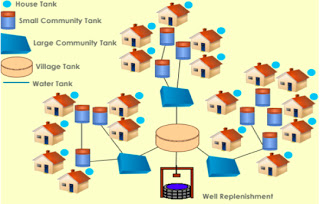
The water we will consume in the future will come from community rainwater harvesting and water reusing techniques for non-human consumption. It will be harvested and managed by a single network. Each consumer will be a core production hub whose scope will be defined by the community to which the node belongs. Sometimes nodes will be households, others will cover rural communities, and others will be buildings and other urban neighborhoods. Each of these nodes should analyze their needs in water consumption and size harvesting and recycling, adapting their needs to their own habitat, in order to have the least environmental impact in the process of creating the water P2P network and therefore achiving sustainability over time.
Clean water may be stored for human consumption, while recycling will give a longer life cycle, through water reuse as gray water (irrigation) and sludge (compost).
P2P philosophy applied to the water lifecycle provides the same benefits as to any P2P network
  • Robustness: The P2P networks are distributed to increase robustness in the event of failure in any node. In the case of a water P2P network, each node is a harvesting and storage centre so that the water network is supplied from different points, increasing the redundancy in harvesting and expanding the total harvesting surface, increasing fault tolerance and availability of water for the entire community. In the same way water storage is also distributed across the network and any node can access multiple sources of stored water following the criteria established within the network itself.
  • Decentralization. A P2P network is always a decentralized network in which all nodes are equal, there aren’t any nodes with special functions, and hence no node is critical for the functioning of the network. The costs are spread among users, being the shared resource, water. Putting together several users on harvesting, recycling and storing water lowers installation costs since each node has access to water harvested and recycled by other nodes. These water P2P networks will replace the national water distribution networks or at least will become a feasible alternative for water consumption groups or self-sufficient communities.
  • Independence: A P2P network give us the independence in our water supply from the water utility companies, which means removing part of the services mortgage in the economy of the households or communities and cover them against increases, regulations, limitations or any governmental regulation over the access to public water, something that will become increasingly more common as water scarcity becomes a hot topic.
A water P2P network is a resilient network that will enable communities committed to these new trend, to maintain their quality of life regardless of external factors that otherwise would adversely affect their life.

Energy crisis – The path to P2P energy

Energy is the engine of our economy. An economy based on growth that permanently demands larger amounts of energy. During the 20th century, especially during the second half of it, economic growth has come hand in hand with the easy access to fossil fuel resources, something that at that time seemed to be virtually inexhaustible.

The economic boom led, from the 50s onwards, to a population boom, to an economic growth acceleration and to a much higher level of energy demand. Oil seemed a panacea, it was not only a source of energy, but its derivatives led to countless new materials, began to be used in the agrochemical industry, in the food industry, textiles, pharmaceuticals, … and above all it was the only source of energy which could be stored and transported in a relatively easy way.
The problem is that thereserves were not limitless, much less, the more the black gold demand grew. Nowadays, in the 21st century no one doubts that the exploitation of the deposits and oil reserves still available, is becoming more and more complex, therefore less profitable. For decades the world has been studying alternative energy sources, the problem is that the study and exploitation of these sources is completely dependent on oil. Some alternatives are better than others, solar versus nuclear, wind against coal, but what about the experiments being carried out to try to find the next panacea? Another source of energy that can be stored easily, which can be used in transportation in order to keep the economy and society of growth. From my point of view, up to now, the two major attempts to find the new black gold, to find the inheritor of oil have been:
The first race resulted in one of the major food crises of the last decades (2007-2008). Poor harvests due to climate change, coupled with the growing demand for biofuels, led to a rise in prices of staple foods that had a devastating impact on poor countries where riots exploded in protest against the rising prices. The UN has already warned that this year 2013 is expected to record even a greater foodcrisis.
To insist and widespread the extensive crops of agrofuels only aggravate the environmental crisis and social inequalities in the world. Nevertheless the growth of agrofuels continues its race, in a market where the interests of the energy lobbies coexist with those of companies engaged in genetic modification.
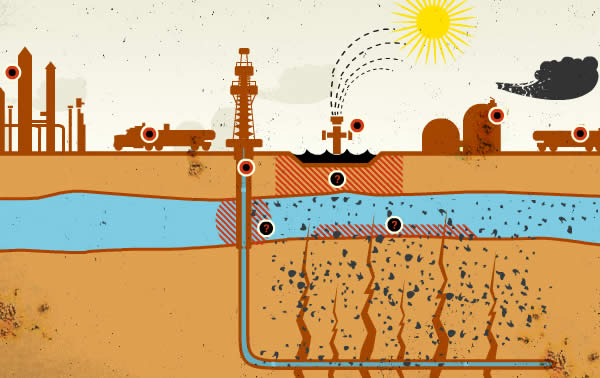
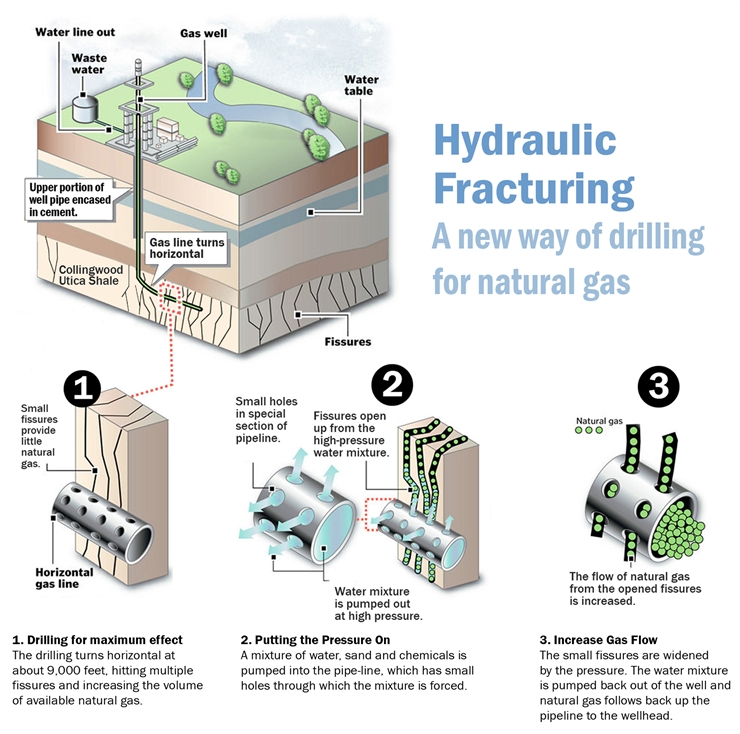
The second race is being run now. Virtually all Western countries have passed bills that allow, on home soil, the extraction of oil and gas through hydraulic fracturing. The risks of fracking remains to be seen, but it’s likely that it increases the access problem to clean water in the developing countries and generates a problem in water quality in the developed countries. The reason is that fracking injects into the underground, using pressurized water and sand, up to 500 toxic, carcinogenic and mutagenic elements that due to the extraction technique itself represent a real risk of seeping into aquifers along with the huge amount of water required in the fracking process that gets contaminated and that the industry ensures can be filtered and delivered back to the network for human consumption. Besides the problem in access to water, the environmental impact of fracking promises to be devastating, which together with the high costs of extraction places this technique as one of the least profitable in the market, being the only advantage the fact that they can supply an end product of similar characteristics to oil, that is to say a product that can be sold as a substitute for oil with the promise of keeping the economy of growth, this headlong flight that has kidnapped our society.
Liquid wars are a reality, the contestants are taking positions and setting the future geopolitical map of the world energy generation and the control of water.
Energy moves the world and the water feeds it, so it’s easy to think that the struggle for control of these two factors will determine our future.
Do we have a choice to take the reins and try to disentangle our destiny from liquid wars? Yes, but it involves a change in the way we live, the way we interact with our habitat, with Mother Earth, with our community. We must return to the path of sustainability and to do it, in terms of energy is necessary to be guided by the following parameters:
  1. Efficiency: The cheapest energy is the energy we do not consume. Energy efficiency criteria should guide the regulation of generation and energy consumption, together with passive strategies techniques.
  2. Self-production: The basic energy needs should be met by self-production, using renewable energy sources, adapted to each consumer unit habitat.
  3. Locatization: The energy losses in the transmission and distribution grids worldwide are estimated between 7 and 15% of the generated energy. Part of the losses have a technical origin (transmission lines, power factors, …) and part come from accidents, fraud or administrative issues. The national distribution grids are a burden of the past. Centralization is inherently high maintenance costs and very low levels of efficiency. Energy generation must be originated near the sources of consumption to avoid transport with the losses and energy costs that entail its own transportation and distribution.
  4. Independence: The current energy supply depends on governments and large utilities companies. Within the households’ economy, the energy mortgage consumes at least 20% of the available resources. Due to the energy shortage that we face, these resources will only increase as energy prices will tend to be higher in the future. The legislation that applies to the generation and consumption of energy will also turn tighter, so getting energy sovereignty guarantees our economic independence and thus freedom to decide on how we want to live.
These four maximssuggest that the best strategy for the production and supply of energy is a distributed, resilient network, in which producers are as well consumers; a P2P energy grid.
P2P Energy
 
 
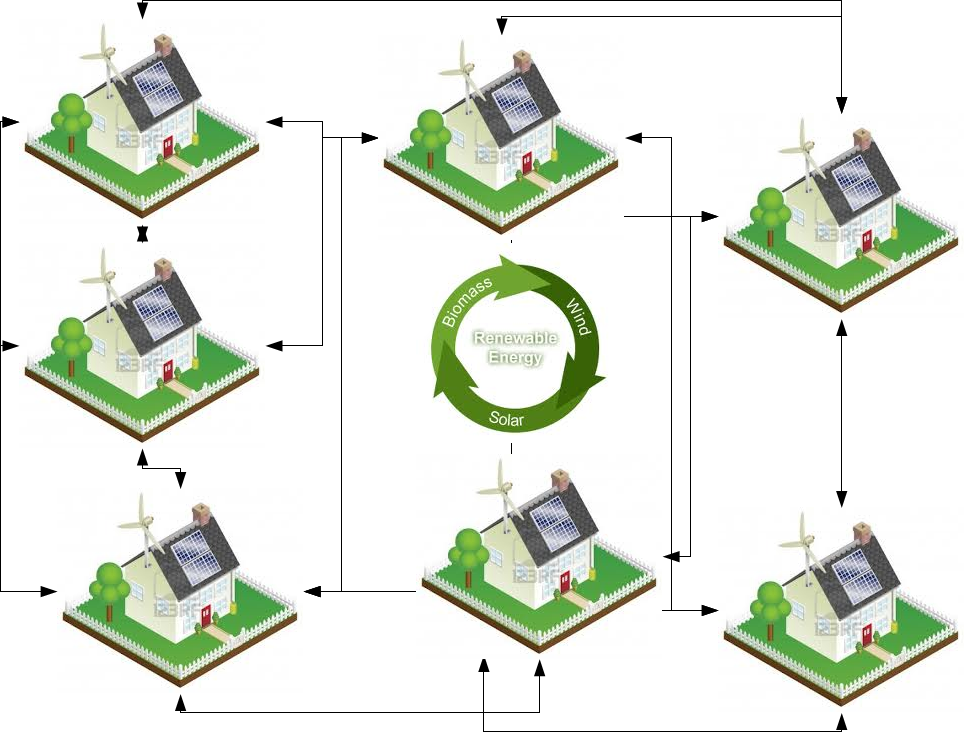
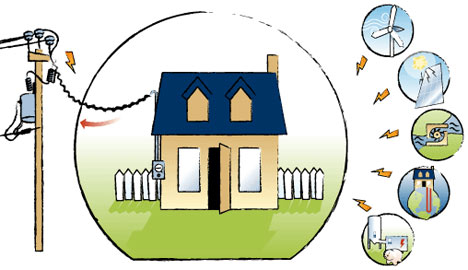
The energy of the future must be a clean energy produced and consumed within multiple networks. Each consumer will be a core production hub whose scope will be defined by the community to which the node belongs. Sometimes nodes will be households, others will cover rural communities, others will be buildings and others urban neighborhoods. Each of these nodes must analyze its energy needs and gauge their production adapting their generation sources to the habitat that surrounds them in order to produce renewable energy with the lowest possible environmental impact.
Most of the energy will be consumed at the time of generation, though a percentage should be stored as well as the surplus in order to ensure supply for the network troughs (whether by natural cycles of renewables or by peaks in the demand).
P2P philosophy applied to the life cycle of energy, provides the same benefits as any P2P network:
  • Robustness: Peer-to-peer networks are distributed in order to increase the robustness in case of failures at any node. In the case of an energy P2P network, each of the nodes is a production node, so that the P2P grid is supplied from different points, increasing the redundancy in the generation, the fault tolerance and the availability of energy. In the same way energy storage is also distributed across the grid and any node can use the stored energy following access criteria established within the network itself.
  • Decentralization. These networks are decentralized, by definition all nodes are equal. There are not any nodes with special functions therefore not one node is essential to keep the grid up and running. The costs are spread among users, being energy the shared resource. The binding of multiple users on self-production, lowers the investment and installation costs since each node has access to the energy produced by other nodes and benefits from the scale of production and the different time zones of peaks and valleys in demand and energy generation. These energy P2P networks will replace the national grids or at least become a viable alternative for energy groups or self-sufficient communities.
  • Independence: An energy P2P network ensures the independence from the utilities, which means eliminating energy mortgage in households’ or community economies and ensures autonomy from price rising, new laws, limitations or any government regulation on public access to energy, something that will become increasingly common as the energy shortage is becomes an issue over the years.
A P2P energy grid is is a resilient network that will enable communities committed to these new trend, to maintain their quality of life regardless of external factors that otherwise would adversely affect its life.

Fracking – When the water broke

In this voracious race to consume the planet’s resources the eternal seekers of an oil substitute began some years ago the folly of fracking, also known as hydraulic fracturing. The number of oil fields is limited and they only decrease over time along with their profitability, but nonetheless the economy needs the black gold, its liquid energy and in the absence of its natural form, they will try to find it in alternative sites; in the reservoirs of rock formations.
That these oil and gas resources were there, hidden in the webs of the Earth, has been known for centuries, but its extraction is so complex and expensive that till only some years ago, it has always been rejected. The gold fever has broken taboos and the competition for scratching the bowels of the earth without mercy, without looking at the consequences; has already started.
The Promises: ‘El Dorado’; reactivating the very battered economies of the Western world, extending the life of the growing economy based on oil; achieving energy independence, returning to the glamorous eighties of the developed world.
What nobody talks about: The environmental cost that fracking will have on our lives; pollution of aquifers due to the pressure injection of five hundred different toxic agents that inevitably will filter into the natural reservoirs of the waters that irrigate our fields. The water that we drink is the waste water used in the hydraulic fracturing process, which the industry assures can be filtered, cleaned and restored to human consumption.
Ecoversity
The federal Energy Policy Act of 2005 contained a provision that has come to be known as the «Halliburton Loophole”, an exemption for gas drilling and extraction from requirements in the underground injection control program of the Safe Drinking Water Act (SDWA). In this any substance that could reach an aquifer must be known, to try to ensure the quality of the water consumed in the U.S..
A world in which 3.4 million people die every day from a water related disease, in which 780 million people lack access to clean water, the solution Governments are giving to the energy crisis is based in a high water demand technique where water is polluted. Fracking will inevitably lead to an unprecedented water crisis.
How come we never learn from past mistakes? An extraction technique with worse than poor performance, becomes an outrageous boom for the industry’s foolish promise to come back hand by hand to the golden ages that already have led us to disaster.
Our society needs energy, but not at any price and not at any cost. We must think of the future, and not  put at risk the future generations and condemn to death millions of people due to lack of access to clean water. Let’s try to set the basis thus beyond our time, then there still might be life with a reasonable quality level and society might live within sustainable limits to ensure our future and the future of clean water.

The ethics behind biofuels are far from ethic!

Gasoline and diesel are the most versatile forms of energy. Unlike any other energy source, petroleum products are easily storable and transportable, so easy, that they move the world’stransport. What will we do when there is no more oil? It seems that much of the efforts that are being made in the research of new energy sources, follow these premises: Find a product that
  1. Has similar characteristics to those of oil
  2. Can be used in machinery that runs on oil today
The solution to these two premise relies on biofuel. In order to replace oil with something, anything, Governments, especially the U.S., are investing astronomical amounts in companies that develop genetically modified organisms to ensure the rapid growth of crops in pursuance of producing more biofuel, or in companies that have discovered a biofuel suitable for jets.
The world wants liquid energy to keep it running and to achieve that, whilst governments keep investing, regardless of any ethical consideration on the use and implications of the excessive development of biofuels or the investment funds, whilst other moguls, get engaged in buying cheap land, swindling the developing world, deforesting, uprooting the native population, impoverishing the area, dividing it into ‘bio’ parcels to then produce and export the golden liquid.
We know biofuels are needed. There is a transport fleet too big to let it crash! But efforts should turn on biofuel research aroundartificially grown organisms, or artificially created organisms. Biofuels cannot stand for :
  • Deforestation
  • Decrease of arable land for human consumption
  • Acceleration of the food crisis
  • Extreme use of water
  • Creation of genetically modified organisms that will replace formerly cultivated crops for human consumption
We cannot afford a no-rules game. Replacing the problem of fossil fuel depletion with a major problem in the form of increased global inequalities, impoverishment of large parts of the planet, and the food crisis will only increase the ecological and social gap where a few countries live at the expense of others.
 

Net metering – Towards a distributed electrical grid

We have already talked about the energy crisis and the need to achieve energy independence through self-generation and the birth of P2P energy networks. At that point we were always talking about communities or households, but the logic applies equally to the distribution and generation of energy in every single country.
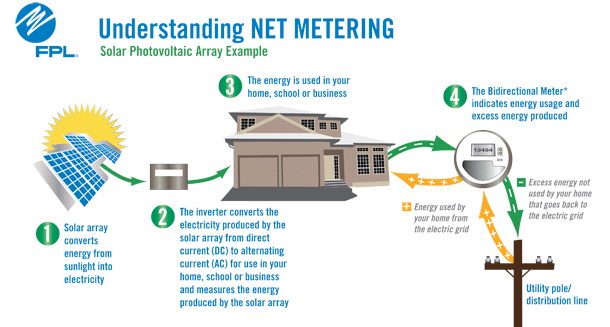
The electric companies are involved in the generation of almost all the energy distributed through the national grid. In some countries the end users are allowed to feed-into the grid with energy coming from renewable electrical technologies. In some cases with a fixed price and long-term contracts, in others with short term contracts and variable prices. In some countries the final users are allowed to generate their own energy and to feed-into the grid with their surplus production peaks, as well as to demand from the grid electricity when their generation is below their consumption; this is called net metering.
Both strategies point to the same thing; transforming the actual grid into a distributed generation network, that would not only rely on large power stations, but which would scatter the production among thousands of the utility customers, distributing as well the investment in power generation among those retail investors.
In a feed-in model, the investor-customer structures the investment in photovoltaic or wind power through a bond. The utility companies are committed to the purchase of the generated energy for a number of years at a fixed price, so through their investment, the client is buying an energy bond for the years the contract will last. The electric companies are the main beneficiary as their clients are relinquishing their investments to the company’s own property, giving them their energy production; the clients are ‘lending’ to the companies to invest in a mini renewable-power station. The clients receive a rate of return that can vary according to new rules and legislation that might apply to the feed-in model.
The net metering is radically different, the philosophy to establish a distributed power generation grid is still there, but it is encouraged in a much more comprehensive way. The client-investor is not investing in a bond with a utility company, but investing in its own energy self-production with the advantage of avoiding the expensive investment in battery banks, as the storage of the generated energy will be done through the national grid.
The net metering is a necessary policy to boost the growth of renewable energy, the energy sovereignty and the energy self-production.
A household that evaluates the self-production and energy sovereignty but dismisses it due to the high initial costs in battery banks that always take a large percentage of the investment, might reconsider the self-production if the net metering is in force in their country and it is offered by the utility companies in their area.
How does the net metering work? In a household or an energy self-production node there will always be valleys and peaks of generation. Times when the facility produces less energy than what the node is demanding (troughs) and times when the facility would produce more energy than what the node demands (peaks). In an off-grid (self-sufficient) installation these peaks and troughs are solved thanks to battery banks, where the excess energy generated would be stored during the peaks and then used during the troughs, where due to climatic circumstances, the node is not producing enough energy to meet all the needs.
What if instead of a battery bank we could store on the grid? That is net metering. The surplus of a household facility will be delivered to the grid and that household will demand electricity from the grid when its production is not covering the energy demand within the household.
The advantage is that the grid is able to supply much more electricity than it has been given by the household to store. This gives the flexibility of sizing the household installation below the highest requirements to cover the worst scenario, so that the initial investment in renewable self-production may be less than would be necessary in an off-the-grid design.
How is the feed-in and demand energy balanced against the grid? It depends on the laws and regulations adopted by each country and by each utility company. Typically, delivery and demand intersect at the same price, therefore at the end of the month, the quarter, the semester or the year, the balance is made between the energy that has been given from the household unit to the grid and the energy that has been consumed by the node from the grid. To that effect, on net metering facilities, there is a bidirectional counter between the mini power station and the grid, so that the amount of energy delivered can be measured as well as the amount of energy consumed from the grid. At the end of the billing period if the household has exceeded consumption from the grid against what has been fed-into the grid, the customer would pay the difference, while if feed-in has exceeded the overall energy demand from the grid, the customer would receive the difference from the utility company.
What about taxes? Some countries have not yet adopted the net metering among other reasons because of taxes. Today, with a distribution grid controlled by the utility companies, all the energy we consume gets taxed at a 21% VAT. However self-produced energy cannot be taxed, so in a net metering system, we will only pay VAT over the difference at the end of each period. If customers produce more than they consume, would utility companies agree to pay back the tax on the generated energy to the households? Will the Government be willing to waive on the taxes over the total energy consumed, and only get the taxes over the balanced energy?
Is there net metering where I live? Wikipedia has a pretty well updated list on the rules and regulation of net metering in a large number of countries, which can be viewed here.
In countries where utilities are the powers that be, the net metering is not yet a reality. And far from thinking globally, in these communities the private interests of the utilities have primacy over the benefits that the net metering will bring to the population as a whole, as well as to the country:
  1. The net metering helps distribute the net energy production of a country, getting more generation sources, redundancy, robustness and resilience both individual and national.
  2. The net metering can help achieve energy independence in a country.
  3. The net metering is efficient. Decreases national production requirements, which would reduce energy generation from fossil fuels and nuclear sources.
  4. The net metering will promote the installation of renewable and clean energy.
  5. The net metering provides energy sovereignty to the people at an affordable cost.
The net metering is the way to begin to convert the national grid in a P2P energy network. Let’s hope Spain fulfills its promise and within 2013 passes the law for net metering without restriction or hindrance that favor only the same supply companies that have blocked the passage of this bill for more than a decade.