
Elinor Ostrom – Governing the commons

Elinor Ostrom (Agosto 1933 – Junio 2012) fue la primera mujer en recibir el premio Nobel en economía gracias a su trabajo sobre el procomún. La profesora Ostrom dedicó su vida a estudiar la relación de las sociedades con los ecosistemas en los que viven, con cómo desarrollar prácticas sostenibles que aseguren el equilibrio y la continuación de los recursos que nutren nuestras vidas. 
No existe una solución única, cada comunidad, cada entorno, cada área, debe evaluar sus recursos naturales  y analizar la mejor forma de gestionarlos para que su riqueza llegue a las siguientes generaciones. Estudió distintos modelos de gestión del procomún en los que no interviene el gobierno, como la gestión de pastos comunales en distintos lugares de África, sistemas de irrigación como el de la huerta valenciana o la gestión comunal de bosques en Suiza y en algunos pueblos de Japón. 
En su libro ‘Governing the commons‘ se recoge gran parte de sus ideas sobre la gestión del procomún.
Si en el año 2009 el estudio de la gestión del procomún fue merecedor del Nobel de economía, quizás podamos pensar que el procomún sea un tema de interés económico internacional y se empiece a valorar y a dar la importancia que tiene en nuestras sociedades y en el impacto que tendrá en la vida de las generaciones futuras.
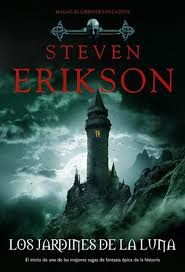
Los jardines de la luna

No sé si debería haber abierto el melón de una nueva saga, teniendo como tengo varias por terminar,  pero así ha sido y ha quedado abierta la temporada de Malaz. 
Un libro ambicioso en el que el autor ha querido crear un mundo épico totalmente nuevo. La falta de referencias o puntos de anclaje a cosas ya conocidas, hace la lectura algo complicada. Una trama abierta en varios hilos no ayuda a que el inicio de la lectura sea sencillo, pero el desenlace final deja la puerta abierta a una gran saga; acción, venganza, intriga, magia, poder, guerras, razas inmortales, un imperio, ciudades rebeldes, dioses y ascendientes… una mezcla para al menos probar.

Autor: Steven Erikson
Nº pag: 500

Higher taxes? For what?

«The higher tax argument implies that politicians know how to spend money better than we do; that they have some kind of moral authority to determine which causes are worthy, and which are not, and that their determinations supersede our own.
Most other notable tax proponents, like Warren Buffett, are terribly confused in that they think giving more money to the government to make these decisions is somehow giving more money to the ‘country’. It’s not.
Again, even if you presuppose that we all have an obligation to a piece of dirt, paying more taxes is merely giving more money to politicians. You and I aren’t getting any of that money. The ‘environment’ isn’t getting any of that money. It goes to the politicians.
And if there is one category of individuals that has shown throughout history, repeatedly, that it is completely and utterly incompetent at spending other people’s money and determining which are the most ‘just’ causes, it is politicians.
More bombs, more wars, more political favors, more debt, more bailouts, more child molesting TSA thugs, more porno-watching SEC regulators, more legislation to take over the Internet and confiscate passports, more gun-happy government agencies with civil asset forfeiture and police authority… this is what politicians do with our money.
Continuing to nurse their largess, corruption, and pitiful decision-making is not the mark of patriotism– it is the mark of insanity, a la Albert Einstein (doing the same thing over and over again and expecting a different result).
By paying higher taxes, you’re feeding the beast. By arguing for higher taxes, they are the animal handler.
If you truly feel an obligation to society and to a piece of dirt, then starve the beast. Let the politicians run it all into the ground, watch the system collapse, and then come back in to create value in the exciting aftermath.
Ranting and raving about society’s duty to continue supporting the most obtusely corrupt system in modern history only delays the inevitable…and hence delays the recovery.»
Extract from Simon Black


Diente de león

La primavera está al llegar, y los primeros dientes de león ya empiezan a brotar. Os dejo un vídeo de Clara, una mujer de 94 años, que cuenta a través de su canal de Youtube recetas de su madre durante la Gran Depresión. En este vídeo explica cómo preparar y cocinar el diente de león.

Y alguna receta + en el blog Sustainablog.

The end of an Era

Not only does this conclude the end of the phase on Do the Math where we evaluate the quantitative and qualitative benefits and challenges of alternatives to fossil fuels, it also points to the fact that we face the end of a golden era of energy. Sure, we managed to make scientific and cultural progress based on energy from animals, slaves, and firewood prior to discovering the fossil fuels. But it was in unlocking our one-time inheritance that we really came into our own. Soon, we will see a yearly decrease in our trust fund dividend, forcing us to either adapt to less or try to fill the gap with replacements. What this post and the series preceding it demonstrates is that we do not have a delightful menu from which to select our future. Most of the options leave a bad taste of one form or the other.
When I first approached the subject of energy in our society, I expected to develop a picture in my mind of our grandiose future, full of alternative energy sources like solar, wind, nuclear, biofuels, geothermal, tidal, etc. What I got instead was something like this matrix: full of inadequacies, difficulties, and show-stoppers. Our success at managing the transition away from fossil fuels while maintaining our current standard of living is far from guaranteed. If such success is our goal, we should realize the scale of the challenge and buckle down now while we still have the resources to develop a costly new infrastructure. Otherwise we get behind the curve, possibly facing unfamiliar chaos, loss of economic confidence, resource wars, and the unforgiving Energy Trap. The other controlled option is to deliberately adjust our lives to require fewer resources, preferably abandoning the growth paradigm at the same time. Can we manage a calm, orderly exit from the building? In either case, the first step is to agree that the building is in trouble. Techno-optimism keeps us from even agreeing on that.

Beric the Briton

Uno de historia, en concreto de la conquista de las islas británicas por el Imperio romano. 
Es un libro clásico de aventuras, narrado con un estilo muy dinámico donde el protagonista no deja de ser, en ningún momento, el héroe de la historia; el jefe de la tribu Iceni, capturado en la batalla que acabaría con la guerra de guerrillas que mantenían las tribus británicas tras la derrota y muerte de su reina Boudica contra el Imperio, es trasladado a Roma, donde se convertirá en el héroe de las masas durante la decadencia del reinado de Nerón.
El autor, G.A. Henty, era un best-seller de la época. Escribió 122 libros entre los años 1867 y 1906 (eso da a algo más de 3 libros al año).
Beric the Briton es del año 1893. El inglés que utiliza el autor es algo antiguo, sobre todo en las estructuras de las frases, pero en términos generales se entiende bastante bien. Con el libro he descubierto que ‘buckler’, para mi no dejaba de ser sólo una marca de cerveza, es el nombre que reciben en inglés, los escudos redondos que utilizaban los gladiadores en la arena.
Lectura recomendable para pasar el rato y tener más datos sobre la conquista de las islas británicas y la vida en Roma en los años 50-60 d.C.
Nº pags. 327
Autor: G.A.Henty

STOP SOPA & ACTA

¿Progresará? Espero que no. Disfrazadas de leyes antipiratería, los principales gobiernos intentan imponer una estrecha censura a los contenidos y servicios en la web. Algunas empresas como Wikipedia, Reddit se suman al ‘blackout’ de Internet ¿Te imaginas no tener acceso a la información de forma libre? ¿Te imaginas Internet con contenidos seleccionados y aprobados por los Gobiernos en función de sus criterios y objetivos?Internet ha permitido a gran parte de la población tener acceso a información libre, ha permitido que opiniones diferente progresen en el mundo, que haya una alternativa al pensamiento único que nos intentan imponer. Internet se ha ido de las manos de los Gobiernos y ahora quieren poner puertas al campo. Si sucede, estaremos condenando a las nuevas generaciones al control mediático absoluto de los Gobiernos.

No a la censura en Internet.
 
STOP SOPA & ACTA