Foodscaping-Waterscaping-Solarscaping

If you had a land wouldn’t you want it to be in production rather than being a cost?
We have got use to look at our gardens as something to show and pay for. We pay taxes over them, we pay to water them, we pay for their maintenance and all that is paid back only with some asthetics around our house.
But a piece of land is much more that a beautiful spot, it is life, it is the habitat for wild life, it is an area where you can harvest water, where you can grow food and where you can harvest sunshine and produce your own energy. Why shouldn’t we take advantage of all what Mother Nature gives us for free?

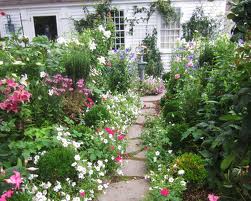
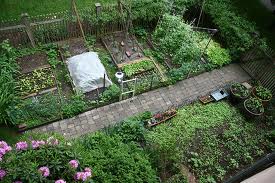
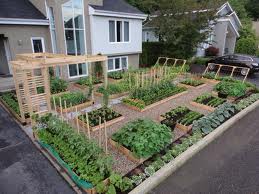
Redisign your green spaces, harvest all you can, change de landscaping for foodscaping, waterscaping, solarscaping, windscaping.
A veg garden and an orchard can be much more beautiful than any grass garden. They will need water, the water you can harvest from the rain which runs down your roof and can be stored and kept in ponds that will not only water your brand new working garden, but also attract life to help your veg garden and your orchard growing. And maybe if you need to automatize the watering or to heat up a little bit your greenhouse or your orchard you might need energy, the energy the sun gives us every single day and is there ready to help us in our work.

Think of your garden as an edible foodscape, a space to harvest water an spot to harvest your energy. Modify the landscapes and transform them into foodscapes, waterscapes, solarscapes, windscapes.

Economic invisibility of nature

What is the price of biodiversity? What’s the value you give to a clean environment against a degradated one? How much is the Amazonas worthed? The clean fresh water? The breathable air?
It all belongs to the commons. It is the gift Mother Nature has given us, but as human social structures become more and more complex, the commons are being taken over by international corporations that without giving a price to the commons are using them to the detriment of the population, in special to the detriment of the poor part of the world population.
Pavan Sukhdev, chairman of TEEB, put it in its own words : ‘You loose nature, you loose the chance of solving poverty’.

Hemp for building

Hemp is a term for fiber and and seed products derived from varieties of the Cannabis plant that has started to be used as a building material.

It’s main properties for building are:

  • Thermal Mass Insulation
  • Negative Carbon
  • Low Density
  • Clean Air
  • High Thermal Resistance
  • High Thermal Inertia
  • Vapor Permeable (breathable)
  • Design Flexibility (adjustable thickness)
  • Fire and Pest Resistant (NO Termites)
  • Significantly Reduce Co2 Emissions
  • Inherently Airtight
  • No Waste
  • No Mold
  • No Termites
  • No Dry Rot
  • Natural Substrates for Plasters and Renders
  • Low Air Infiltration
  • ZERO LAND FILL
  • Energy use is only $0.025c per Square Foot Per Month

Di NO a los productos transgénicos

Los cultivos transgénicos se han ido incorporando a la agricultura sin que haya una discusión o reflexión sobre el impacto de este tipo de semillas en nuestro hábitat, ni los efectos que este tipo de alimentos tendrán en nuestra salud.
Con un consentimiento que procede del desconocimiento más absoluto de cuáles son los efectos secundarios de los productos transgénicos, la sociedad no se pregunta ni se plantea hasta dónde llegan los productos transgénicos. ¿La barra de pan que compras está libre de transgénicos? ¿El chocolate? ¿la carne?…
Damos por hecho que seguimos comprando productos libres de transgénicos igual que hace 30 años y eso no es así. Los productos modificados genéticamente se han incorporado a nuestra cadena alimentaria sin nuestro consentimiento, nadie nos ha preguntado si estamos de acuerdo en que el trigo con que hacen nuestro pan sea transgénico, o si la carne que compramos ha sido alimentada con pienso de origen transgénico, o el azúcar, arroz, patatas….Lamentablemente casi todo lo que comemos, en mayor o menor medida contiene transgénicos.
Por eso, me ha parecido una iniciativa francamente buena el proyecto NON GMO (NO a los productos modificados genéticamente) que apuesta por empresas que certifican que ninguno de sus productos utiliza transgénicos. La ley debería imponer que todos los productos que contienen organismos modificados genéticamente, en algún punto de su cadena de producción, estuviesen marcados de forma clara para que el cliente pudiera evitar su compra, pero ya que la ley apoya los transgénicos y no sabemos qué compramos, seamos los clientes los que demandemos productos libres de transgénicos, apoyando con nuestra compra selectiva a las empresas que apuestan por un cultivo responsable y una alimentación sana.
Os dejo una conferencia de Vandana Shiva sobre el futuro de la alimentación y las semillas.

Electric city

During this summer Yahoo tried to gain ground to Youtube-Google launching a webseries produced and written by Tom Hanks, ‘Electric city‘.
The plot is set in a post-apocalyptic era, where mankind has been reduced to small settlements whose main business is to produce electric power. With fossil and nuclear fuel sources mostly depleted, the communities are dependent on naturally created electricity, be it by air, water, or muscle power (the latter of which is used as a punishment for criminals and other undesirables of this society). Under the motto «All in service to all» everyone must contribute to society’s welfare.
Many things have been written about the future, how each of us envision it. During the seventies and the eighties, the spatial trips were in everyone’s mind and most of the sci-fi literature was about conquering the space. Nowadays we all have other worries:
– Energy scarcity
– Overpopulation
– Environmental collapse
And most of the things written about the next futur, talk about riots, wars, system collapse and fascist regimes.
What has been written still remains in the book’s shelves and the truth is, that future hasn’t yet been written and is upon each of us to write a better future than those ones of riots, wars and collapse, but to do it we have to go further than just imagining it, we have to move, we have to take a step forward and start making changes in our way of life, in our interaction with our habitat, in our habits. 
We need to reduce consumption, to localise the economy, to establish sustainable policies in the natural resources’ extraction and we need to stop poisoning and polluting the place where we all live.

Open E Land

It is always nice to find out that people are moving and are looking for alternatives. This project in Extremadura found the standard problems, that a fixed and old system would bring to any innovative project that tries to encourage people to get out of the system, out of the wheel.
Anyhow they overcame the adversities and organized a summer camp where the people not only learnt about open source, permaculture, self sufficiency, 3D printing… but also sowed the seeds of a network that will be priceless in the close future.
———-
Open E land is a six hectare site in rural, western Spain which the owner has made available for open source projects. It has suffered from the typical degradation of industrial agriculture – near complete loss of top soil and biodiversity with severe erosion and water management problems – and at the start of the year was just empty pasture with no infrastructure.
Their original idea was hold a two week summer camp during which they would construct the physical infrastructure, including a multipurpose strawbale building, to allow the site to be used as full time open source ecology project space. A few weeks into preparations it became apparent it would require a substantial battle to get planning permission to construct anything and take a minimum of six months to get approval – a depressing reminder of the obstructive inertia of governments attempting to preserve existing economic and agricultural models.
Because of this they decided the camp should focus less on construction and more on open source, skill sharing and permaculture. After ascertaining there was enough interest in the camp going ahead we circulated the following camp details:
With minimal effort in publicity and despite the site being fairly difficult to reach they were quickly overwhelmed with the response. At the point they were forced to close camp registration they had 50 people from across Spain and Europe registered – more than the site could comfortably support. A further 25 contacted them to get onto on a waiting list in case of cancellations.
With two weeks to go they issued a crowd sourced fund raising campaign to help buy items for camp infrastructure. At this point there was just two people on site doing all the site preparation and online work, so the ability to develop and promote the campaign was very limited. Even so, they raised around half of the the €2000 we asked for.
The prepare for the event they constructed a 6m geodesic dome, a humanure toilet, shade structures, a shower and a kitchen and hoped it all would be enough. Over the course of the two weeks around 40 people turned up. Despite some oppressive daytime temperatures they ran workshops on subject such as Arduino programming, 3D printing, water management, CEB fabrication, permaculture, hammock making and cooking with natural ingredients. They had forums discussing open source, talks about natural construction methods, ran a kitchen for up to 30 people using organic ingredients sourced from local farms, constructed water management basins and check dams, built a 5m diameter reciprocal roof roundhouse, a 2m 3G/wifi reflector dish plus countless items of furniture from recycled wooden palettes.
They wanted the camp to be as close to free as possible. People were welcome to cater for themselves or they could pay €5 a day for communal food from the kitchen. They originally aimed to run the kitchen at cost, but as it turned out they ended up making €450 from the takings. An honesty bar also contributed around €150. With donations the camp ended up paying for itself and left a legacy of infrastructure on the site.
In attempt to gain experience with CEB construction the person in charge had constructed a manual CEB press using the Open Source Resilient Living design. This was primarily made from recycled scrap metal using and very basic hand tools, with material costs less than €100. While he would not recommend this approach to the first time constructors, it is a worthwhile demonstration of what can be achieved with very little money and skill. After various alignment and precision problems were fixed it became apparent there were issues with the soil on site for CEB – although appearing to have a high clay and/or slit content it would require a lot of water to reach optimum water content and then would exhibit low compressibility and poor strength of the resultant brick. After attempting various experiments with adding course sand and lime more they less abandoned CEB construction for the time being.
They learned a huge amount from putting on the event and there is much still to document and share. Hopefully the foundations for future developments have been laid and discussion of events in the new year are in progress. For the moment the immediate legacy is the creation of a substantial network people and projects and the demonstration of considerable interest in this kind of event and the possibility of self funding models.

You can see some photos from the event here:

Oil & US Dollards or Oil & Yuan

There are several price benchmarks for oil in the world, the main ones are:
Brent oil (from the North Sea)
West Texas Intermediate (from USA)
OPEC Reference Bastket (from the OPEC countries)
Dubai Crude (from the Persian Gulf)
All of them were quoted in USD. 
The whole world oil market has been priced in that currency for over 40 years…a kind of monopoly over a key product, not only in the energy market, but in the food market, materials, textile, cargo …
Without notice, after half a century something has changed: China made a big announcement a month ago, an announcement that has got not coverage in the standard media.
China said «Our banking system is ready, all of our communication systems are ready, all of the transfer systems are ready, and from now onwards, any nation in the world that wishes to buy, sell, or trade crude oil, can do it, using the Chinese currency (yuan), not the American dollar.«
How can a country without huge reserves of oil make such a statement?
During the last years, China has sealed agreements with several countries to ensure their oil supply, not only for their internal consumption but to be able to control a market, the oil trading market, that will be the key of survival during the future years, the years where oil will be a scarce good with rising prices, rising demand and decreasing offer.
There is a new empire rising as the old one falls apart.